← All use cases

Calculated scenario · sourced manifest

Portable Power for a Wildfire Safety Shutoff

3 stations cover the sourced energy and running load; 76 fail at least one check. No source publishes a startup surge for Medical refrigerator (76L biomedical), so this plan cannot confirm any station will start it.

Energy per day
2,244 Wh
Sourced manifest ↓
Running load
263 W
Sourced manifest ↓
Worst-start surge
1,283 W
Sourced manifest ↓
Required delivered energy
4,488 Wh
Sourced manifest ↓
Stations passing
3
Sourced manifest ↓
Stations failing
76
Sourced manifest ↓
Edit this plan in the sizing tool →

By the BatteryRank Engineering Team

01 · Load manifest

Every load in the calculation

Average draw applies each sourced duty cycle; energy is average draw × quantity × daily hours × scenario days.

Sourced device loads and calculated energy
DeviceQuantityHours / dayAverage drawScenario energySource
Refrigerator (full-size)AC12463 W3,024 WhSource · 2026-07-06
Medical refrigerator (76L biomedical)AC12412.2 W583.7 WhSource · 2026-07-20
Wi-Fi router + modemAC12418 W864 WhSource · 2026-07-06
Emergency weather radioAC181 W16 WhSource · 2026-07-20

02 · Reading the plan

What the numbers for a wildfire safety shutoff leave out

What this situation actually demands

A public-safety shutoff is the one outage on this site that arrives with notice, and the notice is what the arithmetic is really for. Every other plan here assumes the power went out while you were doing something else; this one assumes a utility told you a day ahead. So the 2,244 Wh day is not a figure to survive from a standing start — it is a budget you get to prepare for, with a full battery, cold cabinets, and everything topped up before the cut. On this page the head start is worth more than the proportions.

Where these plans go wrong

Assuming the medical cabinet is the expensive one. It is the reason this plan exists and it is also the cheapest line on it: 292 Wh a day against the kitchen refrigerator's 1,512 Wh, because a biomedical cabinet is built to hold temperature and spends only 19% of its life with the compressor turning. Keeping the food cold costs five times what the appliance you bought the station for does. If this plan has to shrink, that is where the whole saving is, and the decision is about groceries rather than about the cabinet.

What this plan does not model

Two limits here, and the first is a boundary rather than a caveat. BatteryRank has no medical expertise and claims none: the 64 W draw and 19% duty come from a manufacturer datasheet for a 76-litre biomedical cabinet and they describe electricity, not storage safety. Nothing on this page is an assurance that any medicine, vaccine, or supply stays inside its required range — that belongs to the product's own labelling, the pharmacy that dispensed it, and the FDA and CDC guidance on refrigerated medicines during a power failure. The second limit is the sky: the 400 W array here is modelled on clear conditions, and a shutoff happens because a region is burning or about to. Heavy smoke cuts what a panel collects, no figure on this site accounts for it, and the harvest should be read as the optimistic end.

03 · Station picks

Three ways to cover the plan

Some links on this page are affiliate links. BatteryRank may earn a commission at no extra cost to you. Commission never affects whether a station passes these checks; when two stations tie on every measured criterion, the one with a live retail offer is shown.

Critical-load fit

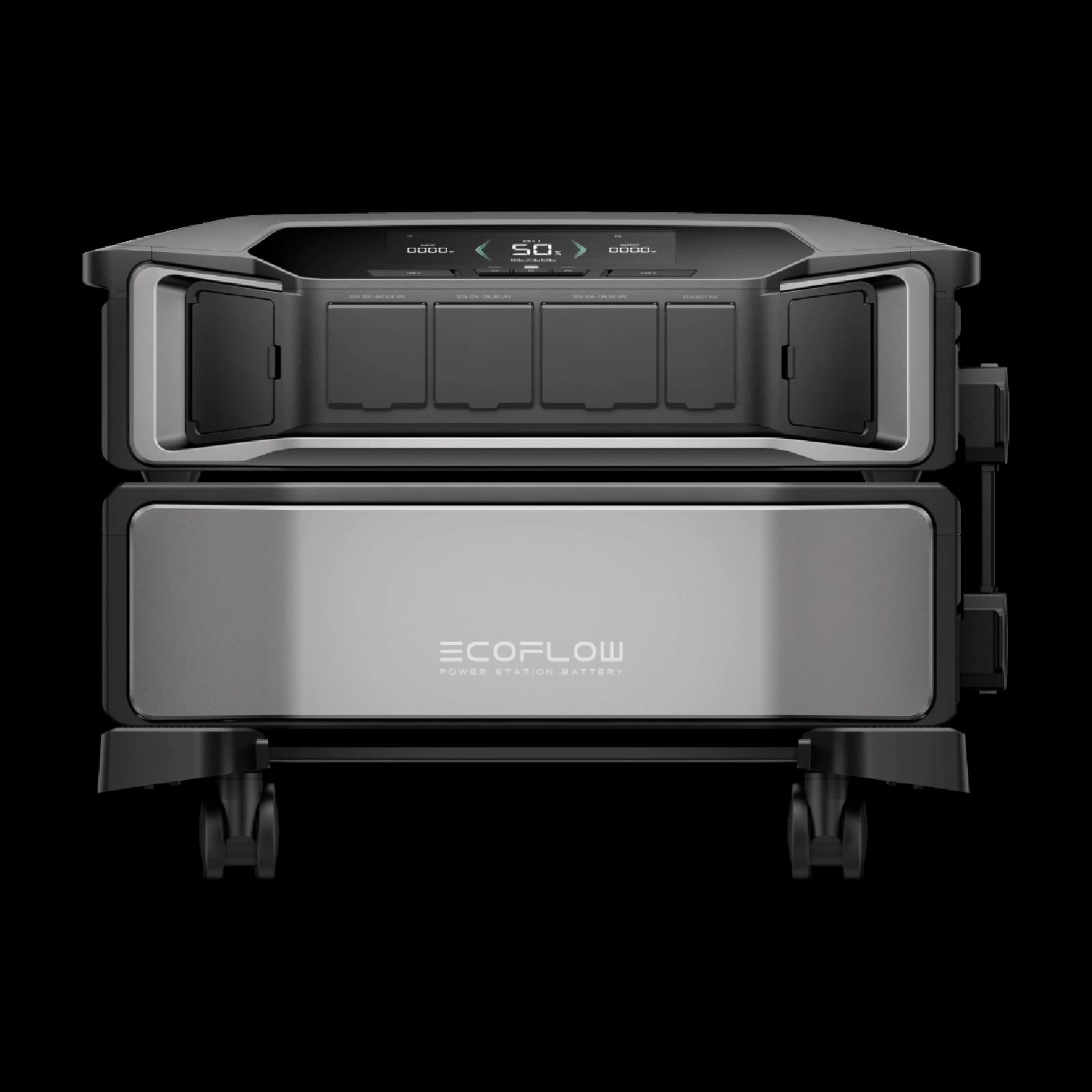
EcoFlow DELTA Pro Ultra

Projected runtime
2.3 days
Headroom
16.4%
Weight
82.4 kg

Why it fits

6,937 W above the plan's running load (7,200 W continuous output)

Main compromise

4,800 W below the highest output reserve across 3 eligible models

Open sourced model dossier →

Solar-balanced plan

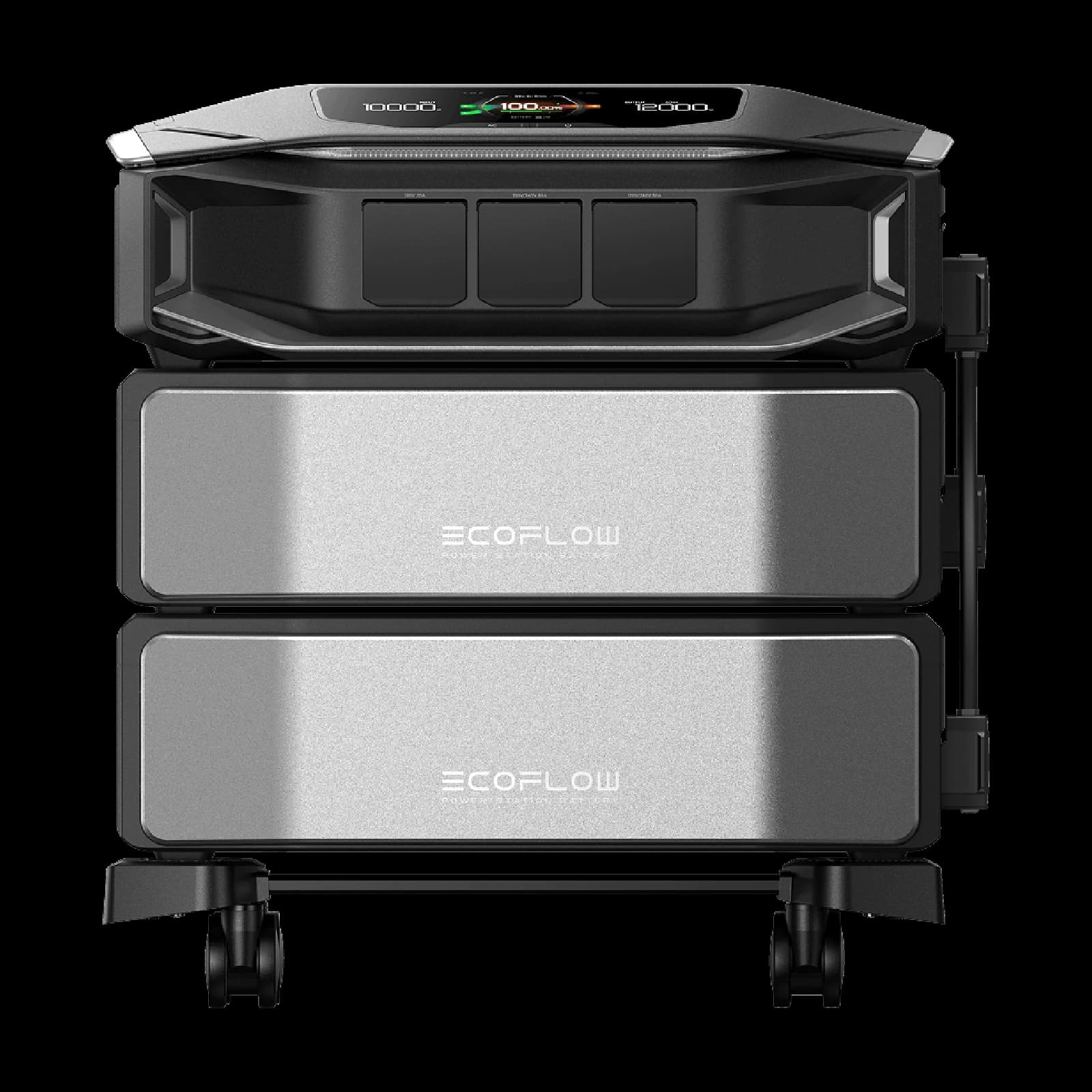
EcoFlow DELTA Pro Ultra X

Projected runtime
4.7 days
Headroom
132.7%
Weight
135.5 kg

Why it fits

10,000 W sourced solar-input ceiling; 10,000 W usable in this plan

Main compromise

2,560 Wh below the largest sourced expanded reserve across 3 eligible models

Open sourced model dossier →

Maximum useful reserve

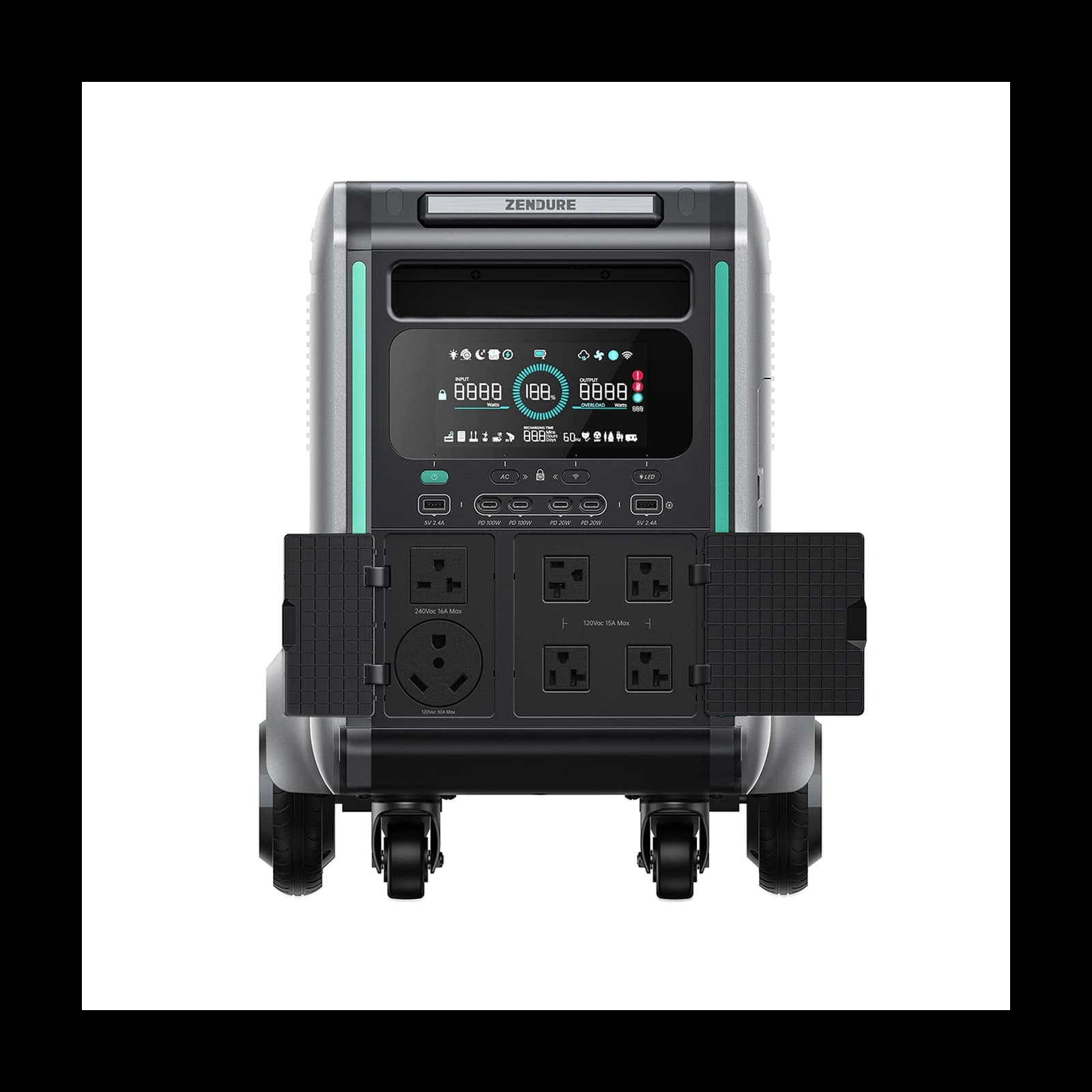
Zendure SuperBase V6400

Projected runtime
2.2 days
Headroom
9.7%
Weight
Not sourced

Why it fits

2.2 projected runtime days

Main compromise

2.5 days less projected runtime than the longest-running eligible model across 3 eligible models

Open sourced model dossier →

Solar balance

What recharging changes

On EcoFlow DELTA Pro Ultra X, the configured 400 W array harvests 1,120 Wh/day.

The remaining deficit is 1,520 Wh/day, for about 8.1 days of modeled runtime.

Review the published solar method →

Explore passing models by projected runtime

This ordered data view is separate from the three recommended buying strategies above.

  1. 01EcoFlow DELTA Pro Ultra X4.7 days
  2. 02EcoFlow DELTA Pro Ultra2.3 days
  3. 03Zendure SuperBase V64002.2 days

Questions from the same calculation

How much power do you need for a wildfire safety shutoff?
4,488 Wh of delivered energy over 2 days, drawing 263 W if every device runs at once. Refrigerator (full-size) alone is 67% of that energy, so it is the load worth measuring first — the rest of the manifest barely moves the answer.
What decides whether a station can start this setup?
Refrigerator (full-size). Its sourced 1,200 W startup demand, arriving while the other devices keep running, sets a worst-case moment of 1,283 W — well above the 263 W running total. A station sized only to the running figure will carry this plan right up until that device restarts.
Why is every load on this plan running through the inverter?
None of the devices in this manifest has a manufacturer-supported DC input, so each one pays the DC-to-AC conversion cost. Where a device does offer a native 12 V cord — camping fridges especially — using it is the cheapest runtime you can buy.
Does knowing the shutoff is coming change what I should buy?
It changes how much you need to store. The cut is announced, so the plan begins at a full charge with pre-chilled cabinets instead of wherever the battery happened to sit, and the notice period is time spent charging from a grid you still have. With the 400 W array covering 1,120 Wh — about half the day — the 4,488 Wh two-day headline behaves more like 1,124 Wh a night, provided the sun cooperates.
Is this page telling me my medication will be safe?
No, and it cannot. What this plan models is electrical: a 64 W cabinet drawing power 19% of the time, and how much of that a station can supply. Whether a specific medicine stays inside its labelled range is a question for that product's instructions, the pharmacy that supplied it, and the public guidance the FDA and CDC publish for refrigerated medicines during an outage. We have no medical background and should not be the source you rely on for it.
Is 432 Wh of Wi-Fi justified during a fire?
It is 19% of the day and the line most worth thinking hard about, because it depends on equipment you do not own. Your router reaches the internet only if the provider's street-side hardware is still powered, and inside a shutoff zone that is not a safe assumption. Test it during the notice period: if it works, budget it, and if it does not, that 432 Wh moves straight into refrigeration while the emergency radio carries the alerts for almost nothing.