Solar-balanced plan
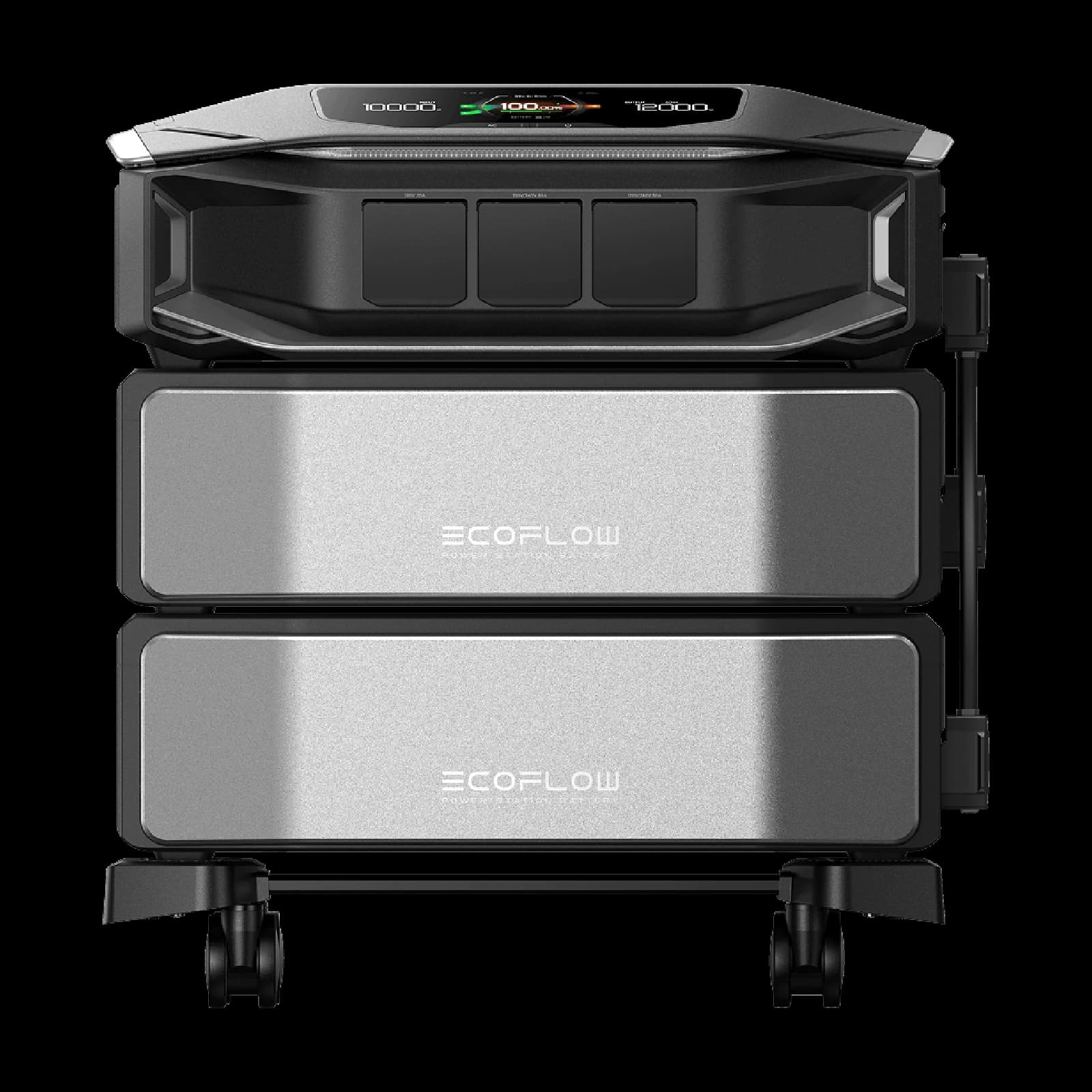
EcoFlow DELTA Pro Ultra X
- Projected runtime
- 3.5 days
- Headroom
- 17.9%
- Weight
- 135.5 kg
Why it fits
10,000 W sourced solar-input ceiling; 10,000 W usable in this plan
Main compromise
No measured compromise across 1 eligible models
Calculated scenario · sourced manifest
We size this setup for 72 hours and 8,856 Wh of delivered energy. 1 station passes every configured check; 79 fail at least one.
By the BatteryRank Engineering Team
It includes Refrigerator (full-size), Chest freezer, Wi-Fi router + modem, 4 × LED lamp (60W-equivalent bulb). Check the daily hours and dated sources ↓
400 W of panels are configured for the solar projection. The station picks must still cover the stored-energy requirement. Runtime is a projection from the sourced loads and capacity assumptions; check your own equipment before buying.
Station picks
The smallest rated capacity that passes this exact plan in our catalog is 12,288 Wh: EcoFlow DELTA Pro Ultra X. Capacity alone does not establish fit; we also check continuous output and sourced startup requirements. Calculation sources ↓
Some links on this page are affiliate links. BatteryRank may earn a commission at no extra cost to you. Commission never affects whether a station passes these checks; when two stations tie on every measured criterion, the one with a live retail offer is shown.
Solar-balanced plan
Why it fits
10,000 W sourced solar-input ceiling; 10,000 W usable in this plan
Main compromise
No measured compromise across 1 eligible models
01 · Load manifest
Average draw applies each sourced duty cycle; energy is average draw × quantity × daily hours × scenario days.
| Device | Quantity | Hours / day | Average draw | Scenario energy | Source |
|---|---|---|---|---|---|
| Refrigerator (full-size)AC | 1 | 24 | 63 W | 4,536 Wh | Source · 2026-07-06 |
| Chest freezerAC | 1 | 24 | 30 W | 2,160 Wh | Source · 2026-07-06 |
| Wi-Fi router + modemAC | 1 | 24 | 18 W | 1,296 Wh | Source · 2026-07-06 |
| LED lamp (60W-equivalent bulb)AC | 4 | 8 | 9 W | 864 Wh | Source · 2026-07-06 |
02 · Reading the plan
Three days is the point where a battery stops being the answer. The manifest asks for 8,856 Wh delivered, and the two cold appliances are 2,232 Wh of every 2,952 Wh day — 76% of the plan sits in two compressors. Only the largest, heaviest tier of the catalogue carries that on stored energy alone, which is why the useful question here is not "how big a battery" but "how does it get refilled". The 400 W array in this plan is not an accessory to the answer; over 72 hours it is most of it.
Treating 72 hours as a capacity figure. Multiply the day out, arrive at 8.9 kWh, and you have specified a station that weighs more than most people can move alone and costs more than the food it protects. The second mistake is subtler: the always-on Wi-Fi router draws 18 W around the clock, which is 432 Wh a day — half again what four LED lamps burn in eight hours, and 1,296 Wh across the outage. Nobody budgets for the router, and it is the third-largest line on this plan.
The 0.35 and 0.30 duty cycles behind those compressor figures describe appliances holding temperature in a conditioned house. Three days into a summer outage the house is not conditioned, and both cabinets will cycle harder than modelled. The solar side is looser still: the harvest shown assumes usable sun, and a multi-day grid failure is usually caused by the weather that removes it. Neither figure knows your latitude, your season, or the storm that started this.
Solar balance
On EcoFlow DELTA Pro Ultra X, the configured 400 W array harvests 1,120 Wh/day.
The remaining deficit is 2,353 Wh/day, for about 5.2 days of modeled runtime.
Review the published solar method →This ordered data view is separate from the single recommended buying strategy above.