Solar-balanced plan
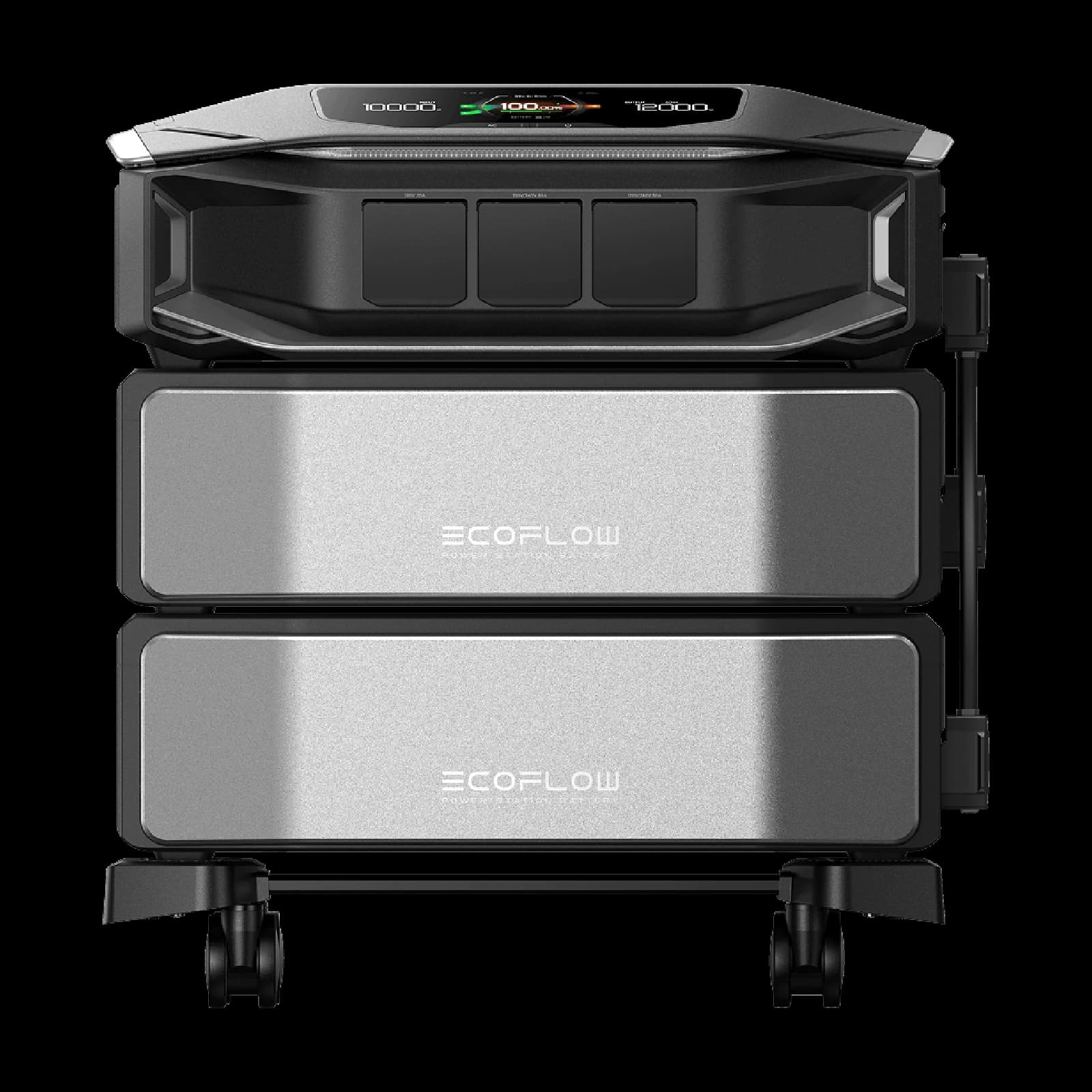
EcoFlow DELTA Pro Ultra X
- Projected runtime
- 2.5 days
- Headroom
- 23.1%
- Weight
- 135.5 kg
Why it fits
10,000 W sourced solar-input ceiling; 10,000 W usable in this plan
Main compromise
No measured compromise across 1 eligible models
Calculated scenario · sourced manifest
We size this setup for 48 hours and 8,488 Wh of delivered energy. 1 station passes every configured check; 79 fail at least one.
By the BatteryRank Engineering Team
It includes Furnace blower (1,000 CFM ECM), Heated throw blanket (50 × 60 inch), Wi-Fi router + modem, 3 × LED lamp (60W-equivalent bulb). Check the daily hours and dated sources ↓
200 W of panels are configured for the solar projection. The station picks must still cover the stored-energy requirement. Runtime is a projection from the sourced loads and capacity assumptions; check your own equipment before buying.
Station picks
The smallest rated capacity that passes this exact plan in our catalog is 12,288 Wh: EcoFlow DELTA Pro Ultra X. Capacity alone does not establish fit; we also check continuous output and sourced startup requirements. Calculation sources ↓
Some links on this page are affiliate links. BatteryRank may earn a commission at no extra cost to you. Commission never affects whether a station passes these checks; when two stations tie on every measured criterion, the one with a live retail offer is shown.
Solar-balanced plan
Why it fits
10,000 W sourced solar-input ceiling; 10,000 W usable in this plan
Main compromise
No measured compromise across 1 eligible models
01 · Load manifest
Average draw applies each sourced duty cycle; energy is average draw × quantity × daily hours × scenario days.
| Device | Quantity | Hours / day | Average draw | Scenario energy | Source |
|---|---|---|---|---|---|
| Furnace blower (1,000 CFM ECM)AC | 1 | 12 | 233 W | 5,592 Wh | Source · 2026-07-20 |
| Heated throw blanket (50 × 60 inch)AC | 1 | 8 | 100 W | 1,600 Wh | Source · 2026-07-20 |
| Wi-Fi router + modemAC | 1 | 24 | 18 W | 864 Wh | Source · 2026-07-06 |
| LED lamp (60W-equivalent bulb)AC | 3 | 8 | 9 W | 432 Wh | Source · 2026-07-06 |
02 · Reading the plan
Two lines on this plan are competing answers to the same question. The furnace blower asks 2,796 Wh a day to hold the whole house at temperature; the heated blanket asks 800 Wh to keep one person warm. That ratio, not the catalogue, is what this scenario is actually about — the plan totals 8,488 Wh across two days, and the fastest way to shrink it is a smaller heated volume rather than a bigger station. Deciding how much of the house you intend to keep warm is a larger lever here than any purchase.
Treating twelve hours of blower as a property of the furnace. It is a property of the house: the blower turns when the burner calls, and twelve hours a day of air movement describes a hard cold snap in a leaky building rather than an average night. A well-sealed house in moderate cold will halve it without anyone deciding anything, and at that point the blower stops being two-thirds of the plan. Nobody can look this up — it has to come from your own thermostat behaviour in ordinary winter weather.
Every capacity figure on this site describes a battery at room temperature, and this is the one scenario where that assumption is actively wrong. Lithium cells release less of their rated energy when cold, and most refuse to charge at all below freezing, so a station kept in an unheated garage, a porch, or a car is not the station in the specification. It also assumes you have a way to feed a hardwired appliance, which is an electrician's job and belongs in the budget beside the battery.
Solar balance
On EcoFlow DELTA Pro Ultra X, the configured 200 W array harvests 560 Wh/day.
The remaining deficit is 4,433 Wh/day, for about 2.8 days of modeled runtime.
Review the published solar method →This ordered data view is separate from the single recommended buying strategy above.