← Can it run?

Runtime evidence · sourced load

How Many Watts Does a Portable AC Use?

A portable AC draws 1,090 W while running. 1 station covers that running draw, but no source publishes a startup surge for the Portable AC (8,000 BTU DOE) — so no station here can be confirmed to start it.

Average draw
1,090 W
Source · 2026-07-20
Startup requirement
Motor start — no published figure
Source · 2026-07-20
Cover running load
1
Startup surge unverified

By the BatteryRank Engineering Team

01 · Runtime ladder

Capacity steps, on the same load

Nominal capacity × depth of discharge × inverter efficiency ÷ sourced average draw.

Estimated runtime by portable power station capacity
Capacity classEstimated runtimeEvidence
300 Whstep 10.2 hrPortable AC (8,000 BTU DOE) load · 2026-07-20
500 Whstep 20.4 hrPortable AC (8,000 BTU DOE) load · 2026-07-20
1,000 Whstep 30.7 hrPortable AC (8,000 BTU DOE) load · 2026-07-20
2,000 Whstep 41.4 hrPortable AC (8,000 BTU DOE) load · 2026-07-20

These are comparison projections, not a promise. Temperature, inverter behavior, cycling, and the individual station's measured delivered capacity can change real runtime.

02 · Reading the numbers

What the portable AC numbers leave out

How this load actually behaves

A portable air conditioner is a compressor load in the same class as a window unit — about 1,090 W running for an 8,000 BTU DOE-rated model — with the added inefficiency that single-hose designs pull conditioned air out of the room and draw unconditioned air in to replace it. It works harder than a window unit for the same cooling.
Where buyers get this one wrong

Treating it as a lighter-duty alternative to a window unit because it rolls around. On the battery side it is the same problem, and the same compressor inrush decides whether the station can start it at all.

What our figure does not cover

We publish no startup wattage for this unit because the manufacturer publishes none, so this page does not report any station as confirmed to start it. The running figure is the OEM cooling-mode rating for an 8,000 BTU DOE-rated model, measured under test conditions rather than in a hot room with the hose run through a window kit — expect real draw at the top of that range whenever the unit is working hard, and treat the runtime figures below as an upper bound rather than a plan.

03 · Passing stations

One station passes this load

Some links on this page are affiliate links. BatteryRank may earn a commission at no extra cost to you. Commission never affects whether a station passes these checks; when two stations tie on every measured criterion, the one with a live retail offer is shown.

Best all-round reserve

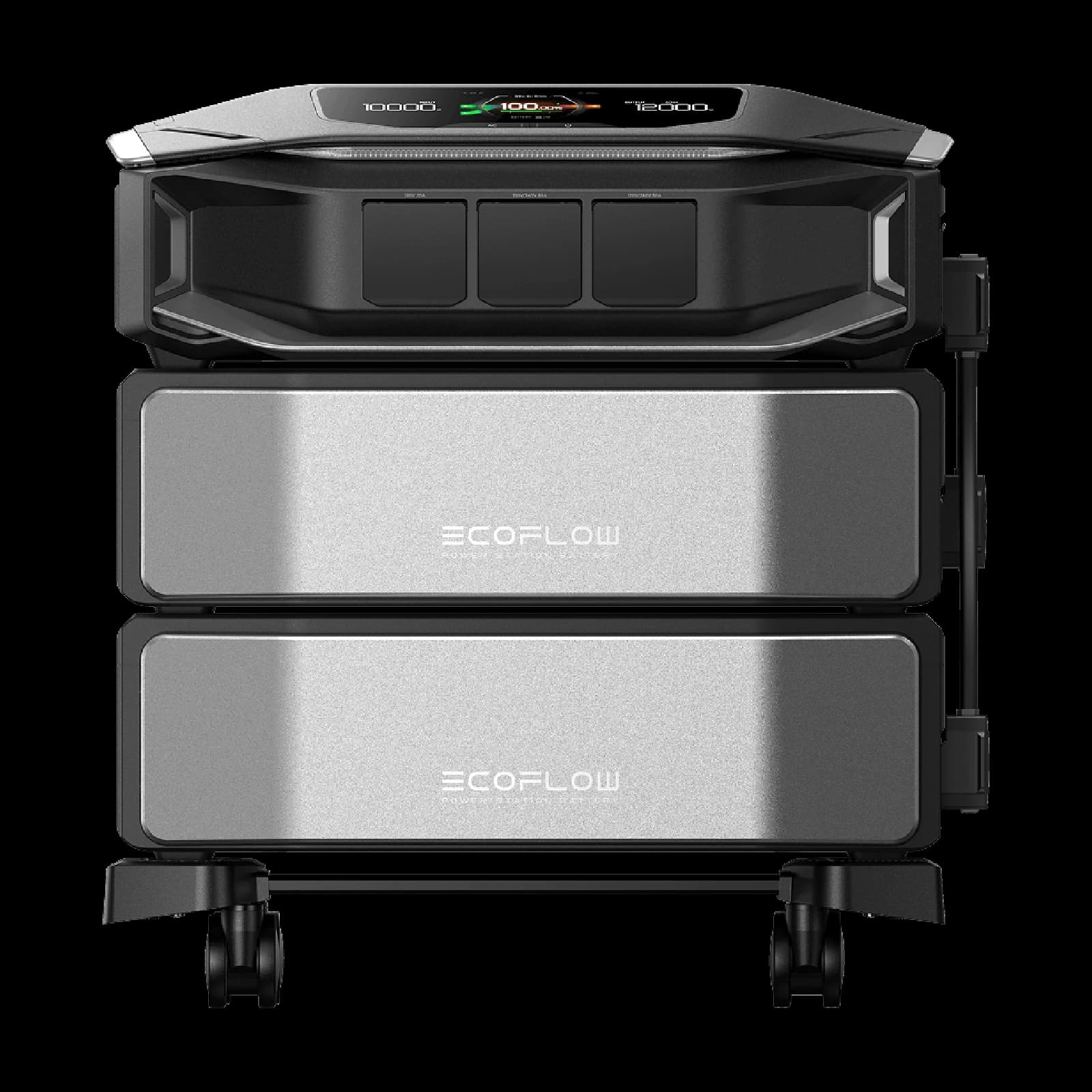
EcoFlow DELTA Pro Ultra X

Projected runtime
28.7 hr
Headroom
19.8%
Weight
135.5 kg

Why it fits

79.7 BatteryRank score — the highest of any station that fits this plan

Main compromise

No measured compromise across 1 eligible models

Open sourced model dossier →

Explore passing models by projected runtime

This ordered data view is separate from the single recommended buying strategy above.

  1. 01EcoFlow DELTA Pro Ultra X28.7 hr

Runtime uses each linked model's sourced capacity and output data; open its dossier for provenance.

Solar effect

400 W of panels on EcoFlow DELTA Pro Ultra X

Daily harvest
1,120 Wh
Daily balance
9,139 Wh deficit
Runtime with solar
1.3 days

Computed with this model's sourced solar-input limit and BatteryRank's published harvest assumptions. Check the solar method → · Model sources →

04 · Evidence record

Device assumptions used

Sourced running draw
1,090 W
Duty cycle
100%
Startup surge
No separate surge figure sourced
Manufacturer spec · 2026-07-20

Questions, answered from the same inputs

How Many Watts Does a Portable AC Use?
Only partly. 1 station in the current sourced catalog covers the running draw and daily energy, but this is a motor/compressor load whose startup surge no cited source publishes — so BatteryRank does not report any station as able to start it.
What power figure matters most for a portable AC?
The startup surge does, and it is the figure nobody publishes for this load. Running draw sets battery runtime, but a motor or compressor can demand several times that for the first moments of a start, so a station that matches the running watts can still fail to start it. Measure the real inrush with a clamp meter before relying on any station.
Can a portable power station run a portable air conditioner?
The running draw is within reach of large stations; the compressor start is the unknown, and it is the part that decides. Without a published startup figure we will not tell you a specific station will start yours.
How long would a large station last?
At roughly 1 kW continuous, even a 2 kWh station is measured in a couple of hours. Air conditioning is the load that most reliably exceeds what portable batteries are good at.
Is there a lower-power way to stay cool?
A fan is two orders of magnitude cheaper in watt-hours and is what most off-grid setups actually rely on. Cooling a person is a far smaller problem than cooling a room.