← All use cases

Calculated scenario · sourced manifest

Power a Refrigerator and Chest Freezer

18 stations pass every configured check; 61 fail at least one.

Energy per day
2,232 Wh
Sourced manifest ↓
Running load
280 W
Sourced manifest ↓
Worst-start surge
1,300 W
Sourced manifest ↓
Required delivered energy
2,232 Wh
Sourced manifest ↓
Stations passing
18
Sourced manifest ↓
Stations failing
61
Sourced manifest ↓
Edit this plan in the sizing tool →

By the BatteryRank Engineering Team

01 · Load manifest

Every load in the calculation

Average draw applies each sourced duty cycle; energy is average draw × quantity × daily hours × scenario days.

Sourced device loads and calculated energy
DeviceQuantityHours / dayAverage drawScenario energySource
Refrigerator (full-size)AC12463 W1,512 WhSource · 2026-07-06
Chest freezerAC12430 W720 WhSource · 2026-07-06

02 · Reading the plan

What the numbers for a refrigerator and chest freezer leave out

What this situation actually demands

Every watt-hour on this plan is refrigeration. No lights, no router, no cooking — two compressors and nothing else, which makes it the one scenario here where a duty-cycle assumption is not a detail but the whole answer. The two cabinets are also not equal partners: the refrigerator is 1,512 Wh a day and the chest freezer is 720 Wh, so the box that survives longest without power is also the cheaper one to keep powered. That inversion is the reason to ask this as an appliance question instead of a duration one.

Where these plans go wrong

Powering both cabinets because both are plugged in. The plan is 2,232 Wh a day and the freezer alone is 720 Wh, under a third of it — and a freezer packed with frozen mass is a thermal store that a refrigerator simply is not. Consolidating what matters into the freezer and letting the refrigerator ride removes 1,512 Wh from the daily budget and costs no hardware whatsoever. The second mistake is reading 280 W of running draw as an easy plan: that is what two compressors draw while turning, and neither of them is turning at the moment it starts.

What this plan does not model

This page models one start at a time, and here that assumption genuinely carries weight. Two cabinets run on two independent thermostats, the sourced starts are 1,200 W and 700 W, and nothing prevents them from coinciding — a moment worth 1,900 W that the summary above never prints, because our engine reports the worst single start rather than the worst accident. Only 41 of the 79 sourced inverter ratings would ride through it. Both duty figures also assume cabinets left alone in a room at ordinary temperature, and this manifest has no other lines to dilute the error when that is wrong.

03 · Station picks

Three ways to cover the plan

Some links on this page are affiliate links. BatteryRank may earn a commission at no extra cost to you. Commission never affects whether a station passes these checks; when two stations tie on every measured criterion, the one with a live retail offer is shown.

Critical-load fit

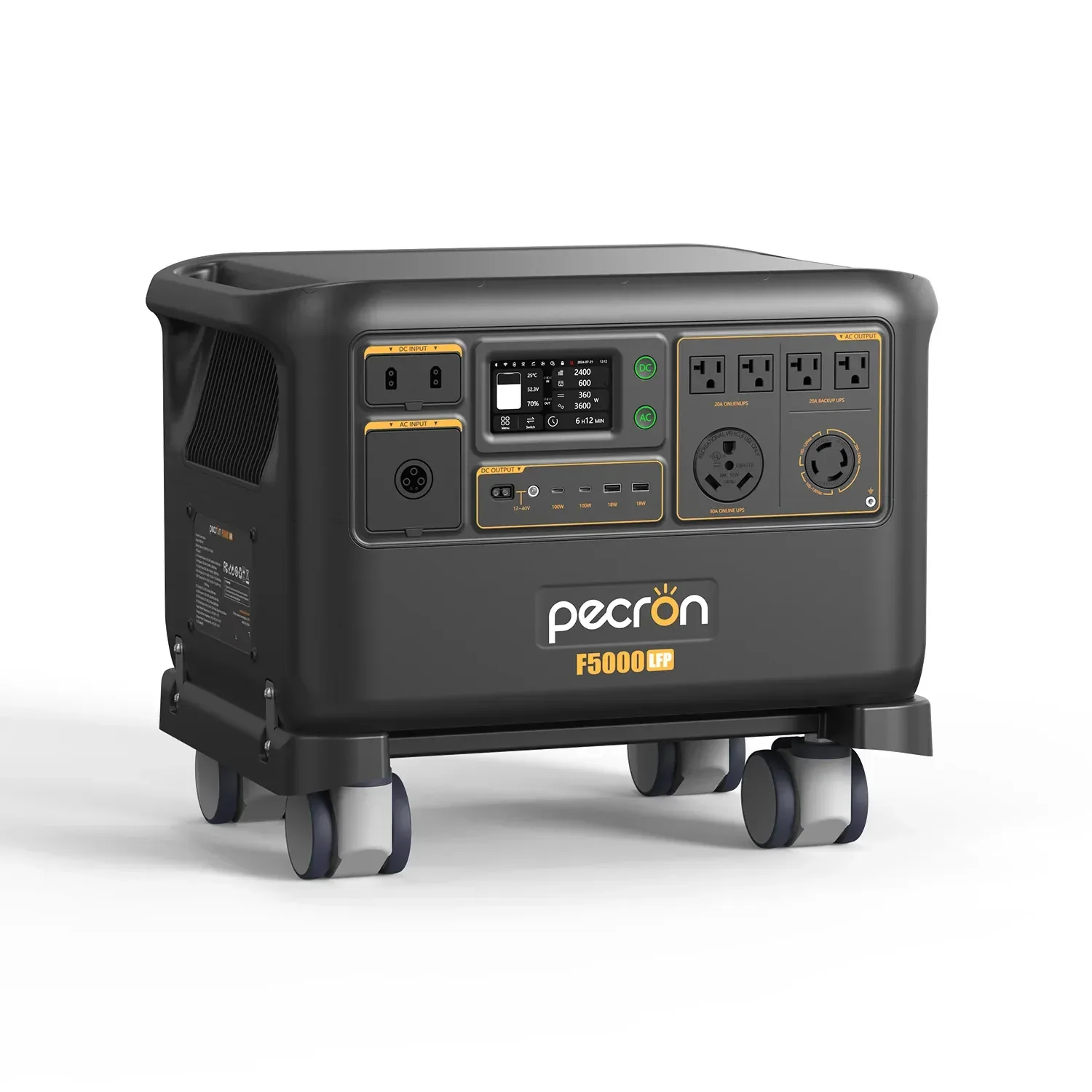
Pecron F5000LFP

Projected runtime
1.8 days
Headroom
75.5%
Weight
56.2 kg

Why it fits

6,920 W above the plan's running load (7,200 W continuous output)

Main compromise

4,800 W below the highest output reserve across 18 eligible models

Open sourced model dossier →

Best all-round fit

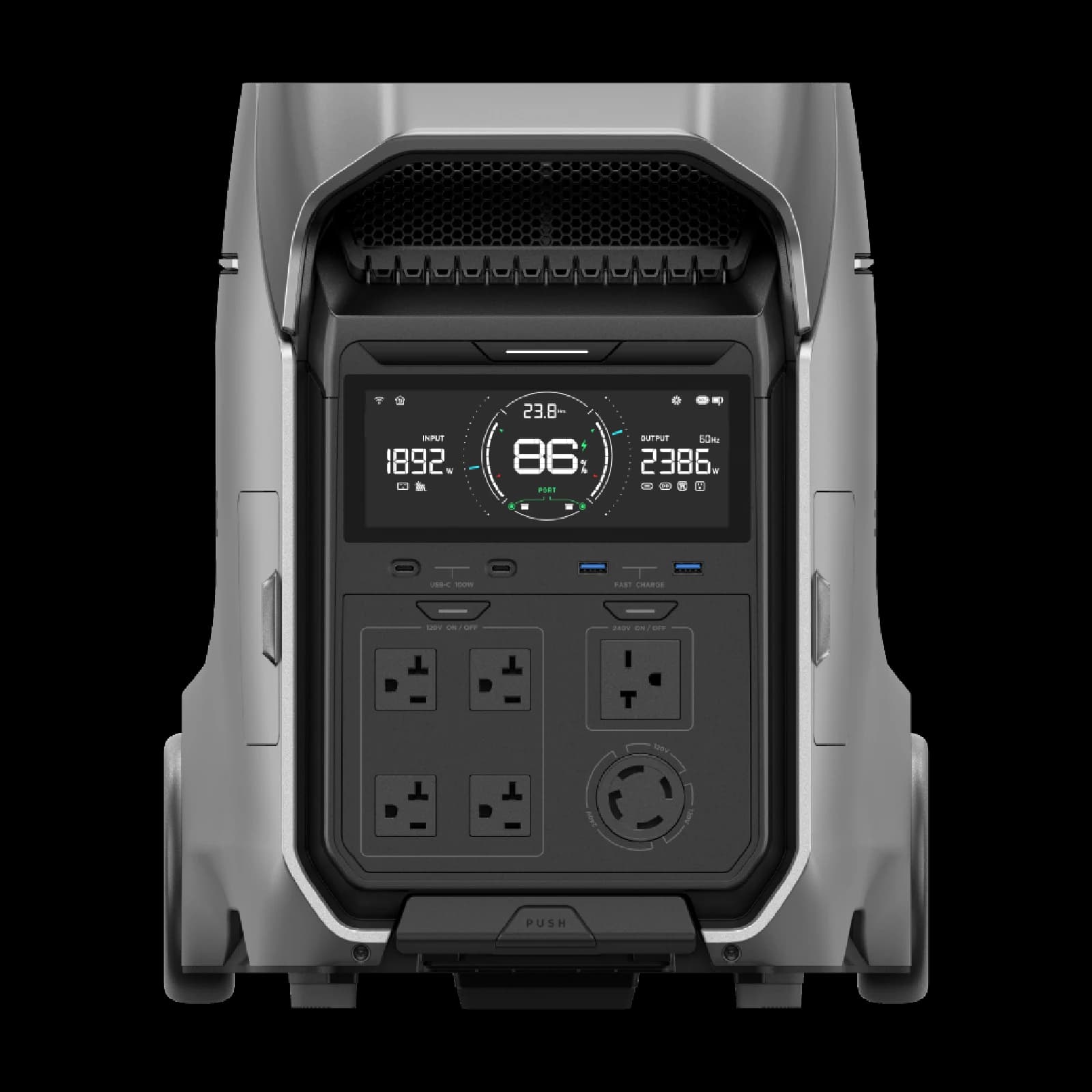
EcoFlow DELTA Pro 3

Projected runtime
1.7 days
Headroom
69.8%
Weight
51.5 kg

Why it fits

75.6 BatteryRank score — the highest of any station that fits this plan

Main compromise

4 points below the highest-scoring eligible model across 18 eligible models

Open sourced model dossier →

Maximum useful reserve

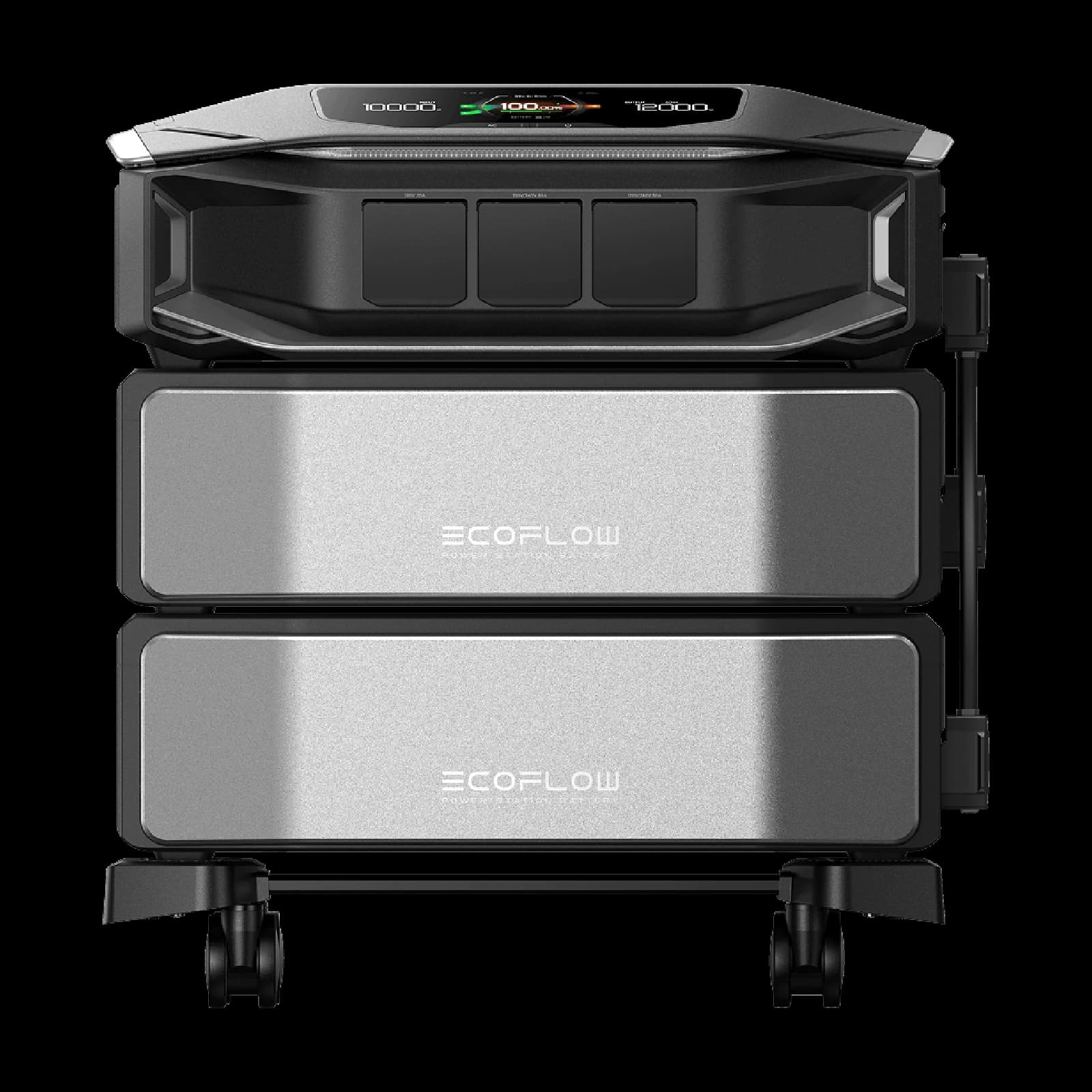
EcoFlow DELTA Pro Ultra X

Projected runtime
4.7 days
Headroom
368%
Weight
135.5 kg

Why it fits

4.7 projected runtime days

Main compromise

2,560 Wh below the largest sourced expanded reserve (15 of 18 eligible models have this sourced value)

Open sourced model dossier →

Solar balance

What recharging changes

The default plan does not assume solar recharging. Add a panel size in the editable calculator to see daily harvest and deficit by station.

Review the published solar method →

Explore passing models by projected runtime

This ordered data view is separate from the three recommended buying strategies above.

  1. 01EcoFlow DELTA Pro Ultra X4.7 days
  2. 02EcoFlow DELTA Pro Ultra2.3 days
  3. 03Zendure SuperBase V64002.2 days
  4. 04Jackery Explorer 5000 Plus1.9 days
  5. 05Pecron F5000LFP1.8 days

Questions from the same calculation

How much power do you need for a refrigerator and chest freezer?
2,232 Wh of delivered energy over 1 day, drawing 280 W if every device runs at once. Refrigerator (full-size) alone is 68% of that energy, so it is the load worth measuring first — the rest of the manifest barely moves the answer.
What decides whether a station can start this setup?
Refrigerator (full-size). Its sourced 1,200 W startup demand, arriving while the other devices keep running, sets a worst-case moment of 1,300 W — well above the 280 W running total. A station sized only to the running figure will carry this plan right up until that device restarts.
Why is every load on this plan running through the inverter?
None of the devices in this manifest has a manufacturer-supported DC input, so each one pays the DC-to-AC conversion cost. Where a device does offer a native 12 V cord — camping fridges especially — using it is the cheapest runtime you can buy.
If I can only power one of them, which should it be?
The freezer, on every axis that matters. It is 720 Wh a day against the refrigerator's 1,512 Wh, so it costs under half as much to run, and frozen mass buys hours of margin that a merely chilled cabinet does not. The refrigerator becomes the box you open sparingly and, if this looks like a long one, empty into the freezer. That decision is worth more than the difference between any two stations here.
Why is the running load so small when the plan feels so big?
Because compressors spend most of their lives switched off. Two cabinets together are 280 W while both are actually turning, which 78 of the 79 sourced inverter ratings supply without effort — the energy comes from doing that for twenty-four hours, not from doing it hard. This is the plainest case on the site of a plan that is almost entirely about capacity and barely about output.
How much does the duty-cycle assumption move this number?
More than on any other plan here, because there is nothing else on the manifest to absorb it. The refrigerator is modelled at 35% duty and the freezer at 30%, and 2,232 Wh is true only while both hold. A garage in August pushes both up; a cold house pushes both down. Elsewhere on this site that error gets diluted by lamps and routers — here it simply is the answer.