← All use cases

Calculated scenario · sourced manifest

Power an RV Refrigerator and Lights

37 stations cover the sourced energy and running load; 42 fail at least one check. No source publishes a startup surge for RV refrigerator (Dometic RC10 class), so this plan cannot confirm any station will start it.

Energy per day
636 Wh
Sourced manifest ↓
Running load
86 W
Sourced manifest ↓
Worst-start surge
86 W
Sourced manifest ↓
Required delivered energy
1,272 Wh
Sourced manifest ↓
Stations passing
37
Sourced manifest ↓
Stations failing
42
Sourced manifest ↓
Edit this plan in the sizing tool →

By the BatteryRank Engineering Team

01 · Load manifest

Every load in the calculation

Average draw applies each sourced duty cycle; energy is average draw × quantity × daily hours × scenario days.

Sourced device loads and calculated energy
DeviceQuantityHours / dayAverage drawScenario energySource
RV refrigerator (Dometic RC10 class)DC12417.5 W840 WhSource · 2026-07-20
LED lamp (60W-equivalent bulb)AC469 W432 WhSource · 2026-07-06

02 · Reading the plan

What the numbers for an RV refrigerator and lights leave out

What this situation actually demands

At 636 Wh a day this is the smallest plan on the site, and its proportions are the surprise. Four LED lamps burning for six hours are 216 Wh — 34% of the day, more than three times the share lighting takes on any other scenario here — against 420 Wh for a refrigerator that runs around the clock. Lighting feels free because a single bulb is 9 W. In a plan this small nothing is free: four of them together draw 36 W, against the cold box's 50 W.

Where these plans go wrong

Sizing for the appliance and ignoring the evening. Every instinct says the refrigerator is the plan and the lamps are trim, and by energy that is two-thirds true — but the trim is the only part of this you control. The 420 Wh is set by a thermostat, while the 216 Wh is set by how many lamps are on and for how long: cutting the evening from six hours to four gives back 72 Wh, more than a tenth of the whole day, and costs nothing but a decision.

What this plan does not model

A plan this small exposes a cost our arithmetic does not carry. The lamps run on AC, so the station holds an inverter awake for six hours in order to serve 36 W — and while we charge the conversion loss on that 216 Wh, we do not charge the inverter's own idle consumption, because no manufacturer in this catalogue publishes it. On an eight-kilowatt day that omission is noise; on a 636 Wh day even a small constant draw is a real fraction of the answer, and it is the number we would most like to have and cannot get. The refrigerator figure carries its own caveat: it describes a cabinet in a parked rig at moderate temperature, not one sitting in afternoon sun.

03 · Station picks

Three ways to cover the plan

Some links on this page are affiliate links. BatteryRank may earn a commission at no extra cost to you. Commission never affects whether a station passes these checks; when two stations tie on every measured criterion, the one with a live retail offer is shown.

Lightweight fit

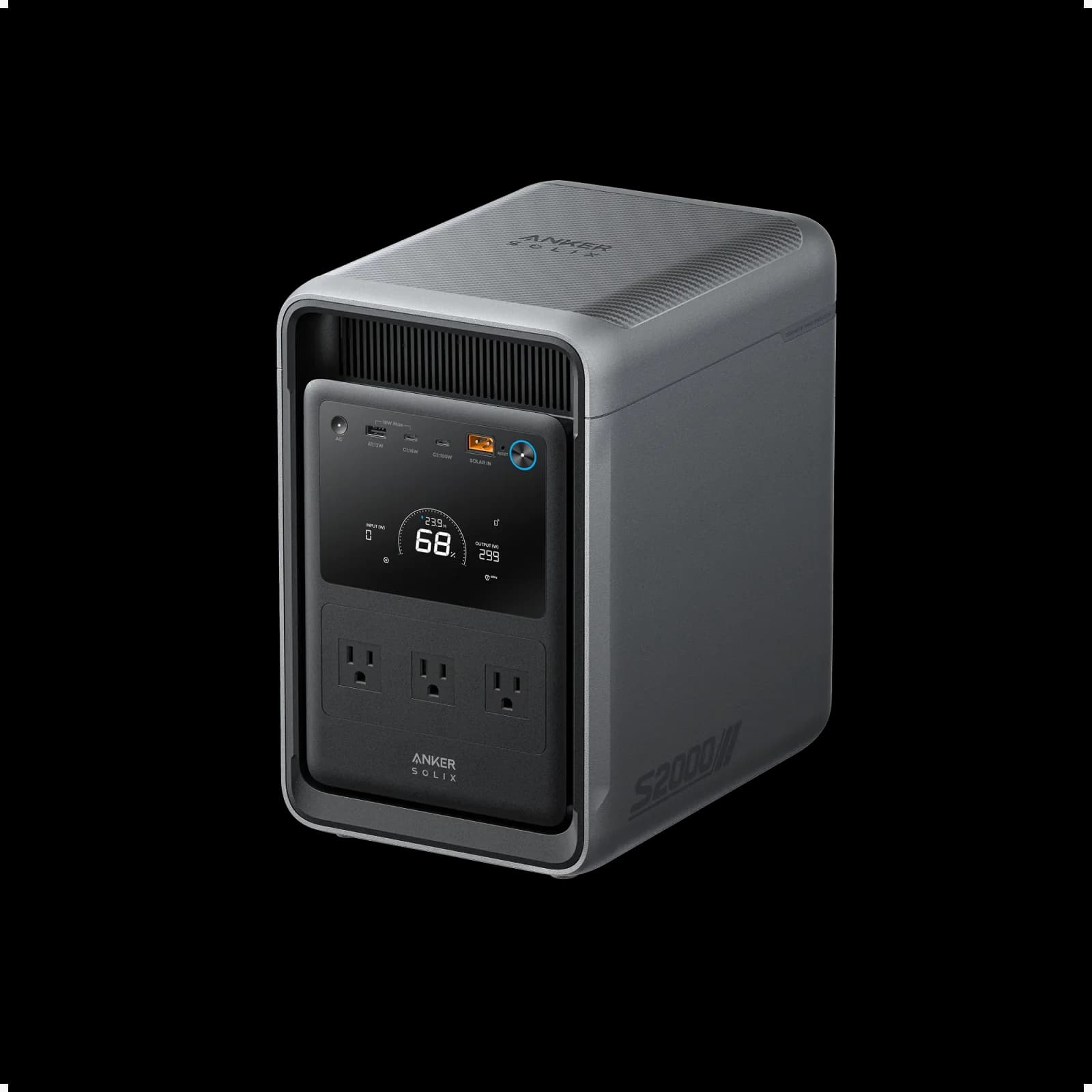
Anker SOLIX S2000

Projected runtime
2.5 days
Headroom
25.5%
Weight
16.2 kg

Why it fits

16.2 kg, 1.2 kg above the 15 kg preferred limit

Main compromise

1.7 kg heavier than the lightest eligible model (36 of 37 eligible models have this sourced value)

Open sourced model dossier →

Best all-round fit

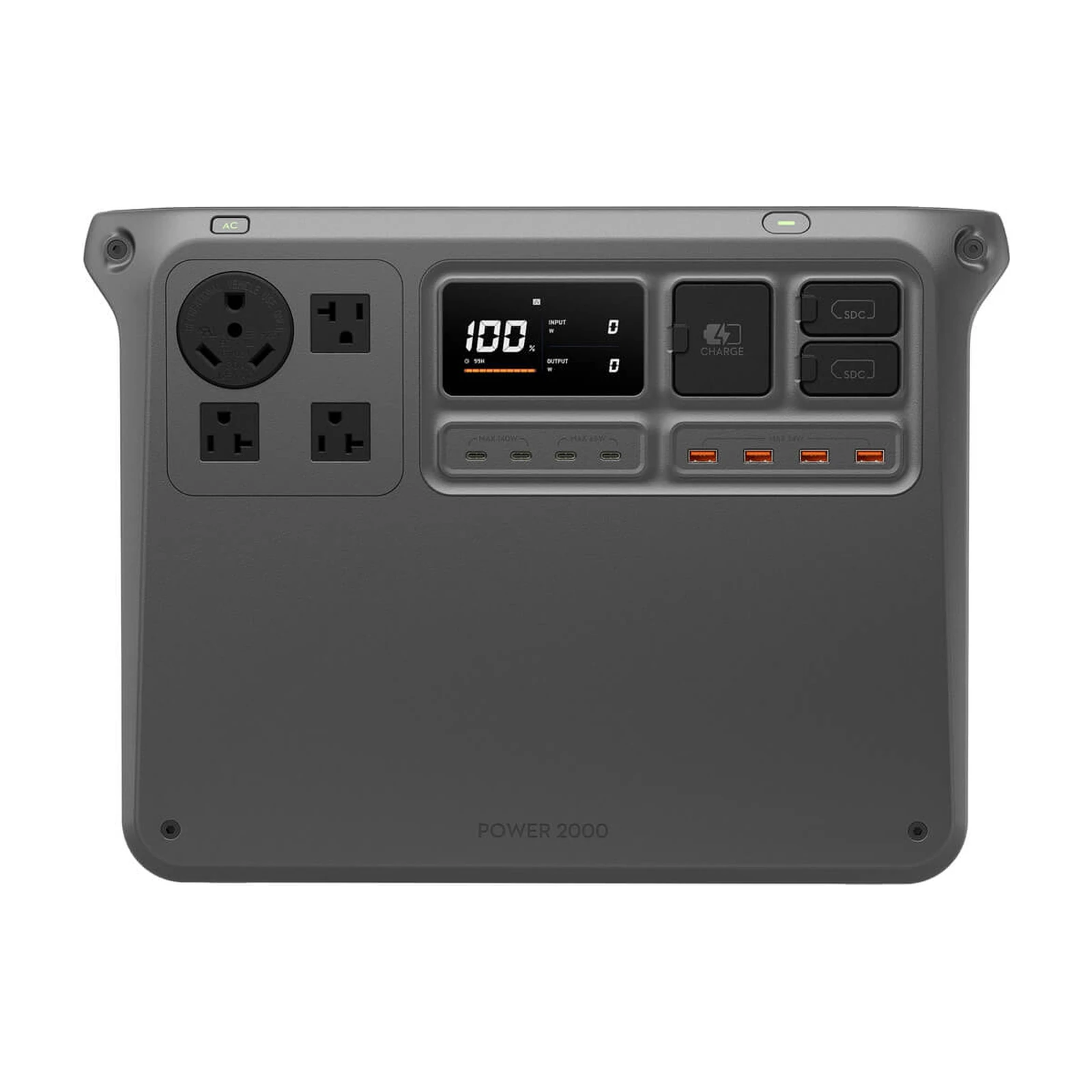
DJI Power 2000

Projected runtime
2.8 days
Headroom
42.1%
Weight
22 kg

Why it fits

74.9 BatteryRank score — the highest of any station that fits this plan

Main compromise

4.8 points below the highest-scoring eligible model (36 of 37 eligible models have this sourced value)

Open sourced model dossier →

Longer off-grid stay

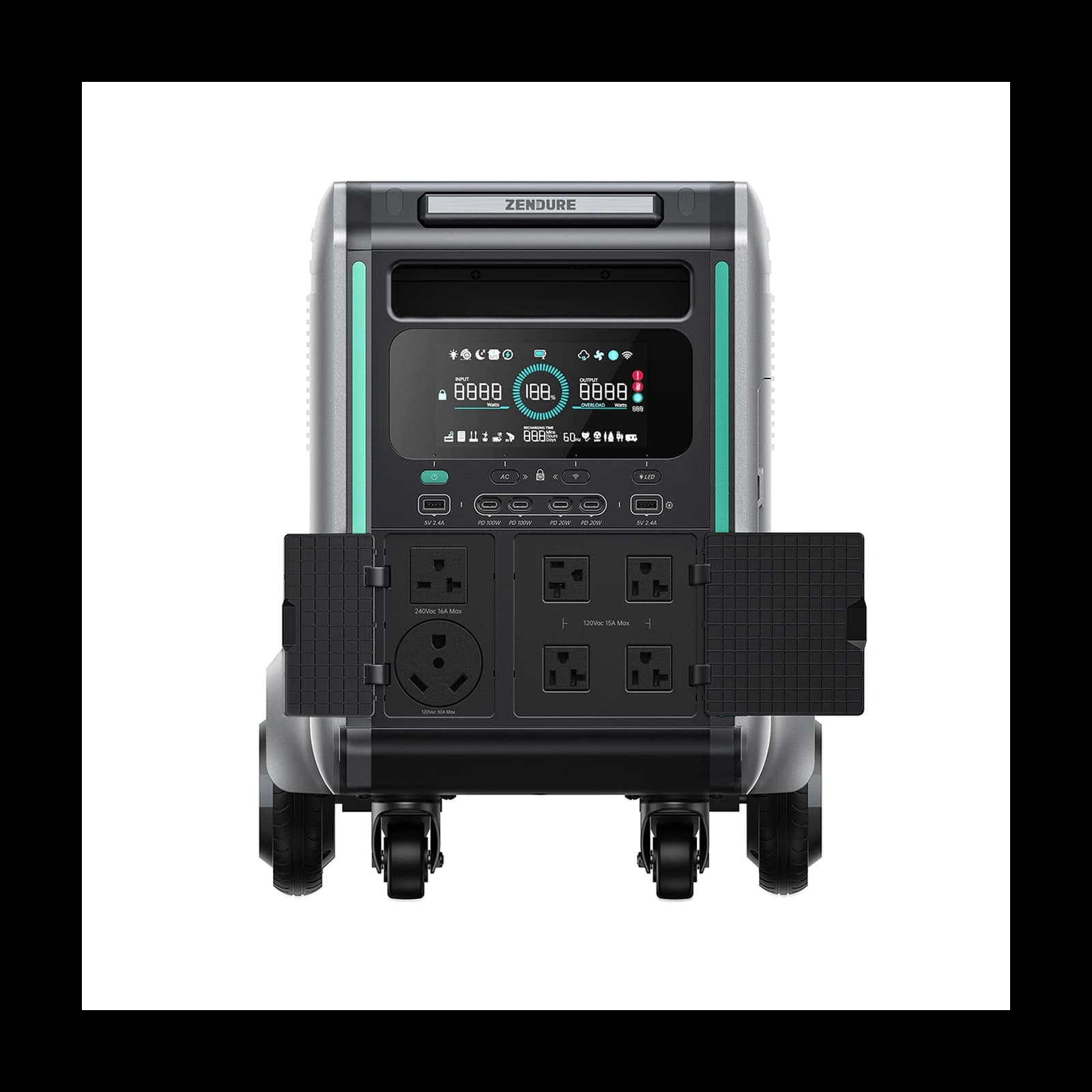
Zendure SuperBase V6400

Projected runtime
8 days
Headroom
301.9%
Weight
Not sourced

Why it fits

8 projected runtime days

Main compromise

9 days less projected runtime than the longest-running eligible model across 37 eligible models

Open sourced model dossier →

Solar balance

What recharging changes

On EcoFlow DELTA Pro Ultra X, the configured 200 W array harvests 560 Wh/day.

The remaining deficit is 161 Wh/day, for about 76.4 days of modeled runtime.

Review the published solar method →

Explore passing models by projected runtime

This ordered data view is separate from the three recommended buying strategies above.

  1. 01EcoFlow DELTA Pro Ultra X17 days
  2. 02EcoFlow DELTA Pro Ultra8.5 days
  3. 03Zendure SuperBase V64008 days
  4. 04Jackery Explorer 5000 Plus7 days
  5. 05Pecron F5000LFP6.4 days

Device decisions

Complete kits

Questions from the same calculation

How much power do you need for an RV refrigerator and lights?
1,272 Wh of delivered energy over 2 days, drawing 86 W if every device runs at once. RV refrigerator (Dometic RC10 class) alone is 66% of that energy, so it is the load worth measuring first — the rest of the manifest barely moves the answer.
What decides whether a station can start this setup?
Nothing in this manifest has a motor or compressor start above its running draw, so the 86 W continuous figure is the real inverter requirement. That is unusual — most outage plans are gated by a startup spike rather than by running watts.
Does running the DC loads on 12 V actually change the result?
Yes. RV refrigerator (Dometic RC10 class) is planned on the station's DC output, which skips the inverter conversion entirely. The same hardware on an AC outlet would draw the same work from the battery plus the conversion overhead, and over 2 days that difference compounds.
Can a 200 W panel simply run this?
Very nearly. The modelled harvest is 560 Wh against a 636 Wh day — 88% of it — which leaves a net drain of 76 Wh and stretches a two-day plan past a fortnight on the same battery. The caveat is that 88% is a clear-sky figure, and the battery still has to carry every night on its own.
Are four LED lamps really worth counting?
On this plan yes, and it is the only one here where that is true. 216 Wh of lighting is a third of the day, and moving those lamps onto the rig's own 12 V fixtures removes both the energy and the reason the inverter is awake at all. Everywhere else on this site lighting never rises above a tenth of the manifest and is genuinely ignorable — here it is the second line and the only one you can move.
When this many stations pass, what actually decides the purchase?
Things this plan does not measure. At 86 W of running load nothing in the catalogue is stretched and the energy is small enough that most of the field clears it, so the sizing checks stop discriminating between candidates. What is left is the weight you personally carry to the pitch, whether it recharges from the vehicle while you drive, and how it behaves left in a hot rig — and only the first of those is on this site as a sourced number.