Best Portable Power Stations for RV & Van Life (2026)
The best portable power stations for RV and van life in 2026 — large-capacity units built for long stays off-grid, each qualifying on either an expansion-battery option or a sourced 12V DC output. Not every unit here has both, and a few have no 12V socket at all, so read the 12V decision check before you read the order. Ranked by the BatteryRank score across capacity, output, durability, and trust.
A vehicle changes which specifications matter. Twelve-volt output feeds the refrigerators and accessories already wired into most rigs without a conversion penalty, and expansion capacity is what turns a weekend setup into something that supports living aboard. Either property admits a station here, which is worth saying plainly: this is a union, not an intersection, so a large expandable unit with no car socket sits alongside a smaller one built around its DC rail. Both properties are ones the general rankings ignore entirely, which is why this cohort looks nothing like the flagship list.
Where buyers get this ranking wrong
Buying capacity when the missing piece was a connector. A large station without the right twelve-volt outlet still runs a compressor fridge through an inverter, wasting energy on a conversion the appliance never needed. The other classic is planning around a rooftop panel that spends half the trip parked in shade because the good campsites have trees.
What this ranking cannot see
The upper capacity limit exists to keep installed whole-home systems off a page about things that travel, which means a genuinely large build is out of scope here. We also rank stations, not installations: fusing, mounting, alternator charging and the wiring between them are the parts that decide whether a rig works, and none of them are specifications we source. One boundary is worth stating because it moves results: we score the bare unit, so hardware that only appears once you buy a hub or a dedicated charger is excluded from the ports and inputs we credit, even when the retail bundle ships it in the same box. Several of the newest entries also remain thinly evidenced — where a manufacturer never published a surge figure, a usable-energy measurement, or a solar voltage window, the field stays empty and the composite is computed from what is left rather than from a guess.
12 V decision check
01A sourced 12 V/car-style outlet is the direct fit for common RV refrigerators and vehicle accessories; check its amperage on the model page.
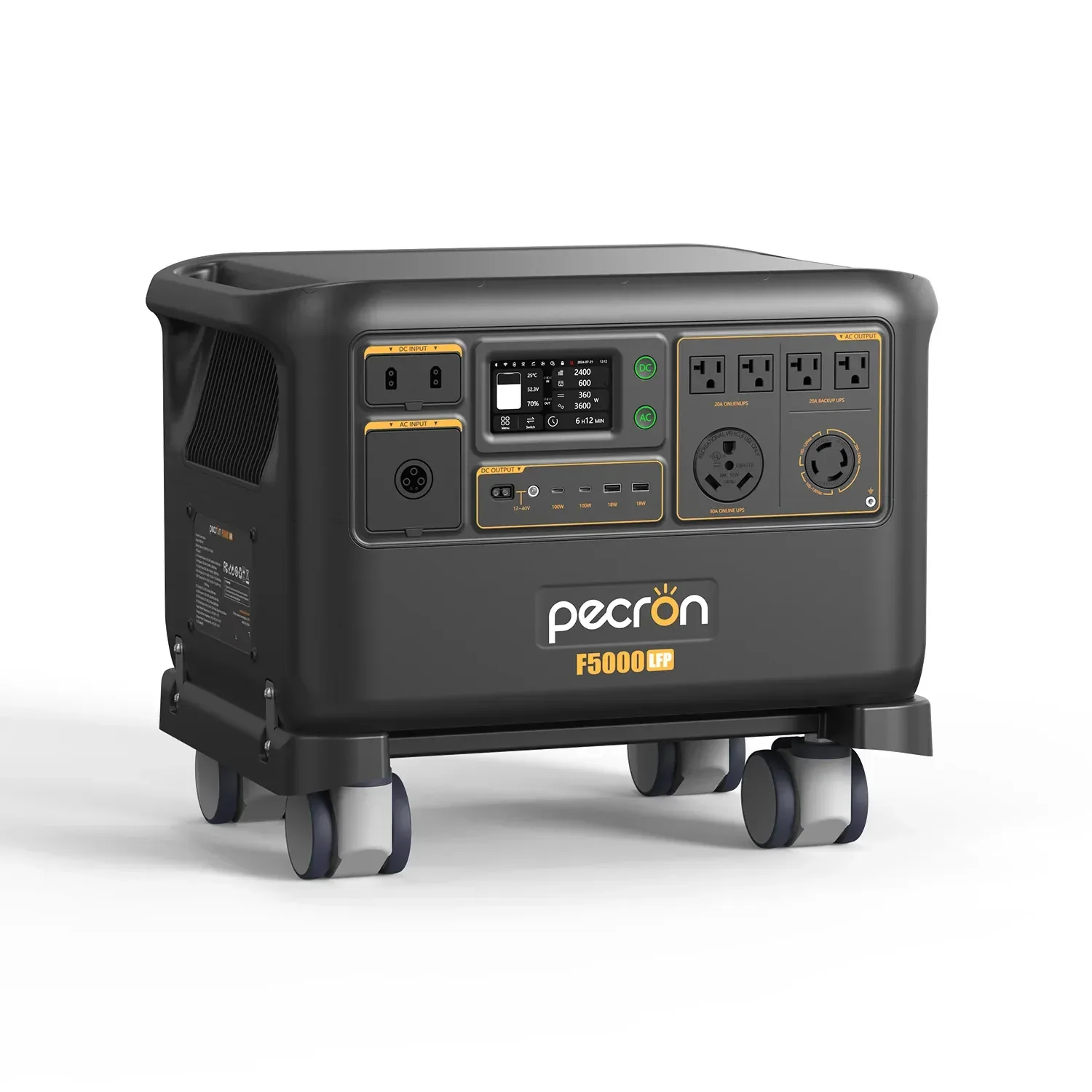
02Qualifying here takes an expansion option OR a 12 V output, not both — so some units on this list have no 12 V socket at all. The PECRON F5000LFP, for one, exposes a variable 12–40 V XT60/5525 rail rather than a regulated 12 V socket, which is not the same connector your fridge expects.
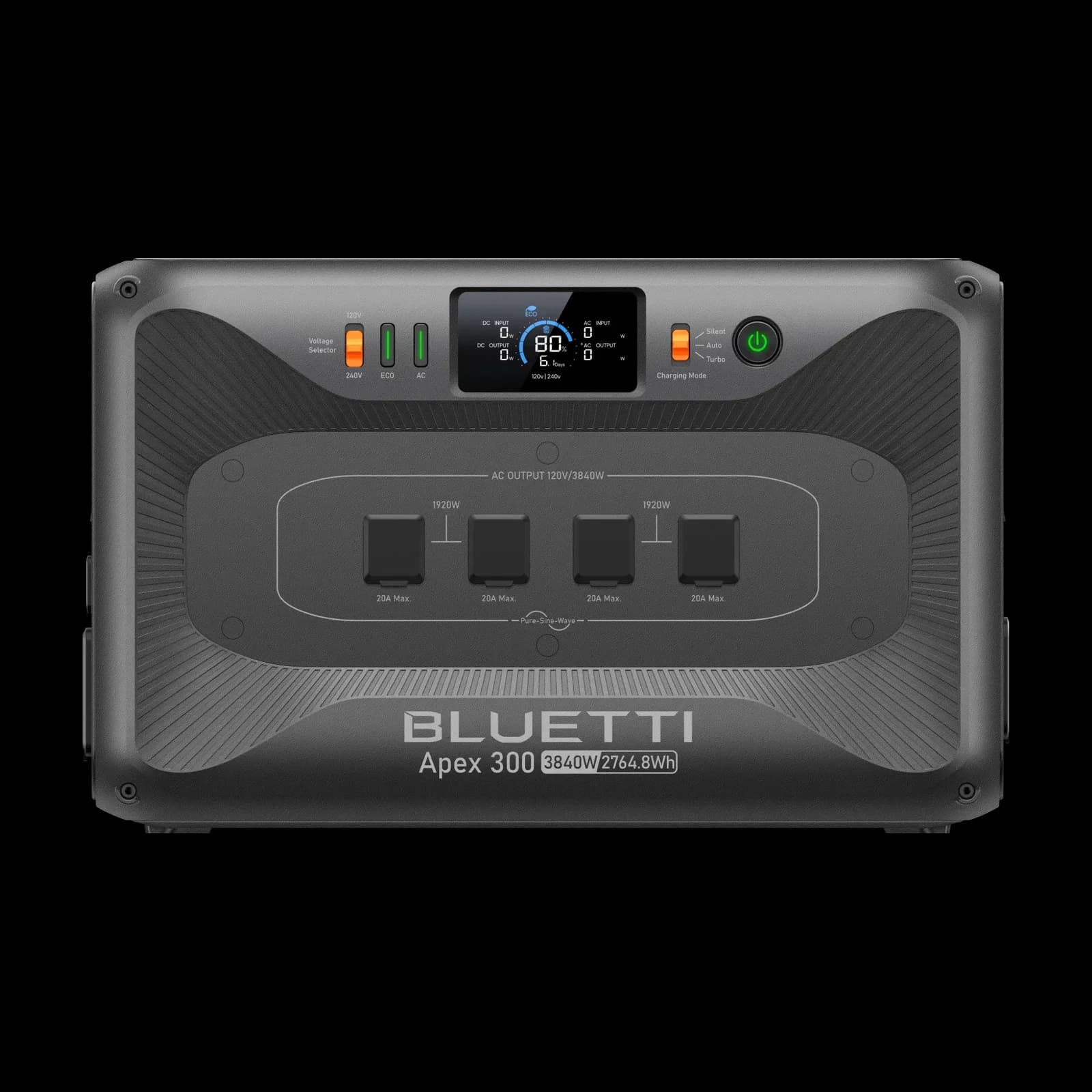
03A port that arrives with an optional accessory is not a port on the unit. The BLUETTI Apex 300 takes its 12 V cigarette and 50 A Anderson RV ports from the separate Hub D1; we score the bare unit, so those do not count here.
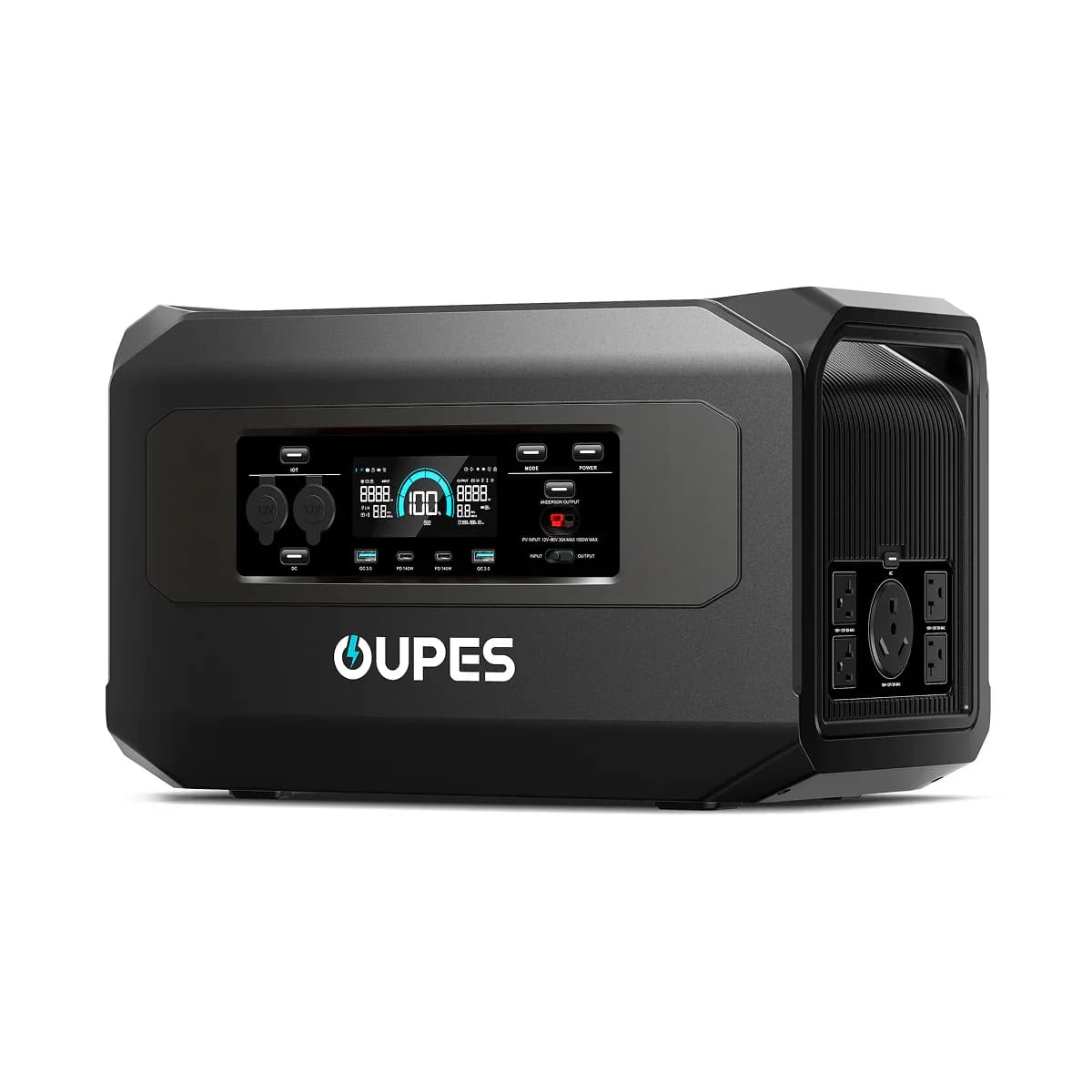
04Likewise, alternator charging sold as an add-on charger is not a native vehicle input — the OUPES Mega 2 Pro needs its optional 800 W alternator charger for that, so we record no car-input wattage for it.
05Where a connection fact is missing from the manufacturer, we leave it blank and treat it as unknown rather than assume it passes.
06Expansion capacity helps multi-day stays, but it does not substitute for the correct 12 V connector, voltage, or current limit.
07The overall order remains the price-independent composite; this module exposes the RV-specific connection tradeoff without creating a competing URL.
What earns a spot
01Eligibility window: large class (roughly 1300–6000 Wh rated) plus either an expansion-battery option or a 12V/car-style DC output — the things that matter most for a long stay off-grid. Bigger installed whole-home systems are excluded; they live on the home-backup list.
02Capacity and expandability decide who qualifies; ordering within the eligible pool is strictly the BatteryRank composite (capacity, output, trust, durability, charging, portability, quiet).
03Expandable capacity (the max with add-on batteries) is shown alongside the base rated capacity on each model’s page.
04How many days it covers depends on your rig’s loads — size it with our sizing tool.
What this rule turns away
32 of 80 tracked stations meet this list's eligibility rule, and the 10 highest-scoring of them are ranked above. The highest-scoring stations the rule excludes are EcoFlow DELTA Pro Ultra X, EcoFlow DELTA 3 Plus and DJI Power 1000 V2. They rank well elsewhere on the site; they do not answer this question.
Capacity and Durability carry it; Portability is the drag.
POWER87
TRUST74
CHARGINGN/A
LIVABILITY29
2
Why · from the formula
Output and Capacity carry it; Charging is the drag.
POWER85
TRUST79
CHARGING55
LIVABILITY65
3
Why · from the formula
Output and Durability carry it; Quiet is the drag.
POWER82
TRUST82
CHARGING69
LIVABILITY51
4
Why · from the formula
Durability and Charging carry it; Capacity is the drag.
POWER54
TRUST87
CHARGING90
LIVABILITY57
5
Why · from the formula
Durability and Output carry it; Portability is the drag.
POWER72
TRUST84
CHARGING64
LIVABILITY37
6
Why · from the formula
Durability and Portability carry it; Capacity is the drag.
POWER57
TRUST94
CHARGING65
LIVABILITY88
7
Why · from the formula
Trust and Durability carry it; Charging is the drag.
POWER63
TRUST80
CHARGING53
LIVABILITY76
8
Why · from the formula
Durability and Trust carry it; Capacity is the drag.
POWER58
TRUST89
CHARGING53
LIVABILITY63
9
Why · from the formula
Output and Capacity carry it; Portability is the drag.
POWER77
TRUSTN/A
CHARGING59
LIVABILITY39
10
Why · from the formula
Durability and Trust carry it; Charging is the drag.
POWER60
TRUST84
CHARGING28
LIVABILITY83
Frequently asked
How much power station capacity do I need for RV or van life?
For running a fridge, lights, fans, and electronics across a multi-day off-grid stay, most van/RV setups want at least a 2 kWh-class unit, often with room to expand. Use our sizing tool to match capacity to your actual devices and stay length.
Does an expandable power station matter for van life?
It can — an expandable unit lets you add battery modules later instead of buying a bigger station up front, which matters when budget or install space is tight on day one. Not every unit on this list is expandable; check each model’s page for its base and max expanded capacity.
Do I need twelve-volt output if I already have an inverter?
You do not need it, but you pay for its absence. Running a DC appliance through an inverter and back down costs energy on every watt-hour, which compounds over a long off-grid stay.
Is a portable station better than a fixed lithium install?
Different trade. A portable unit needs no electrician and comes out of the van when you want it elsewhere; a fixed install charges from the alternator and disappears into the build. Many people end up with both.