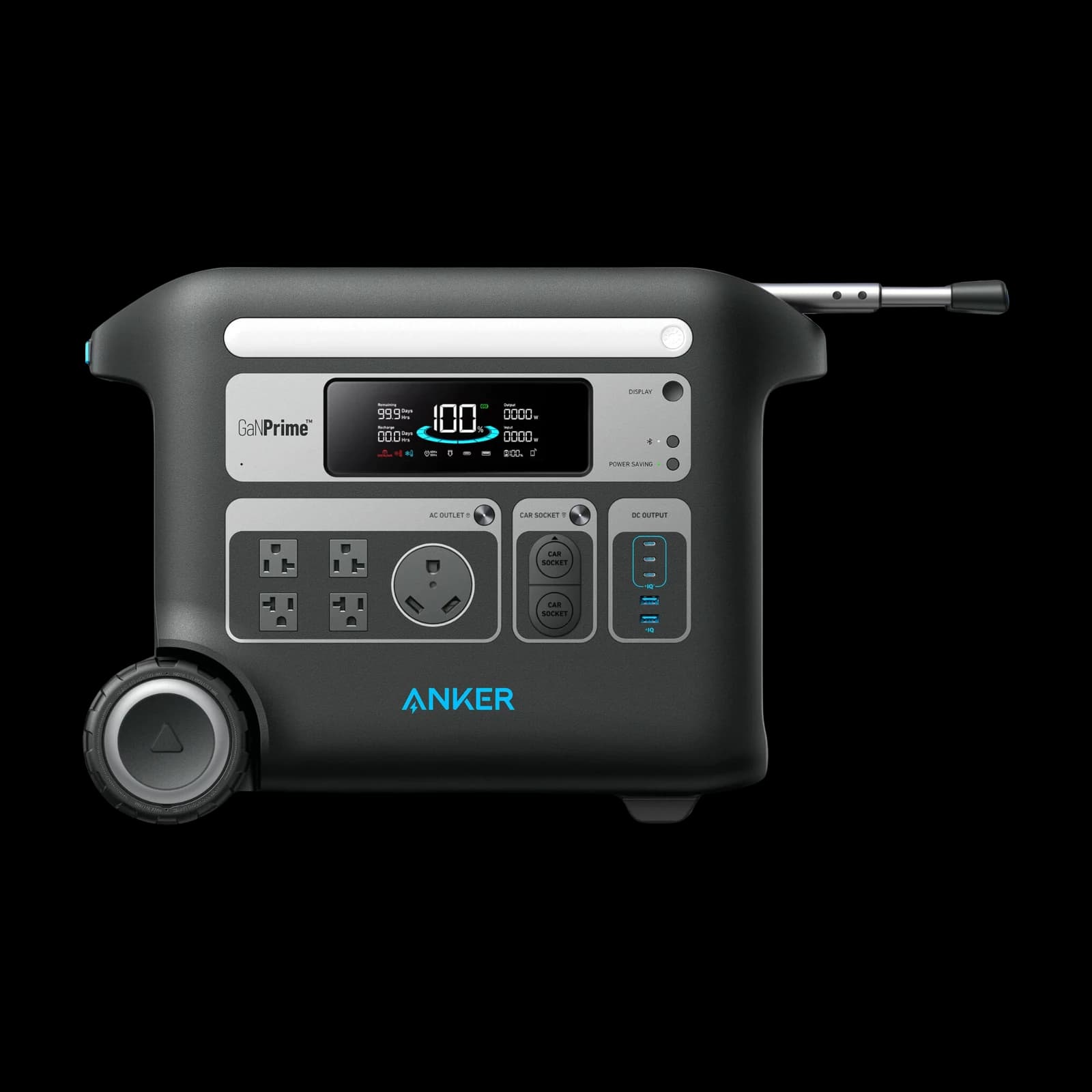
Anker SOLIX F2000 vs Bluetti AC180

Too close to call overall — choose by how and where you use it.
No price tie-breaker today — choose based on fit and the sourced details.
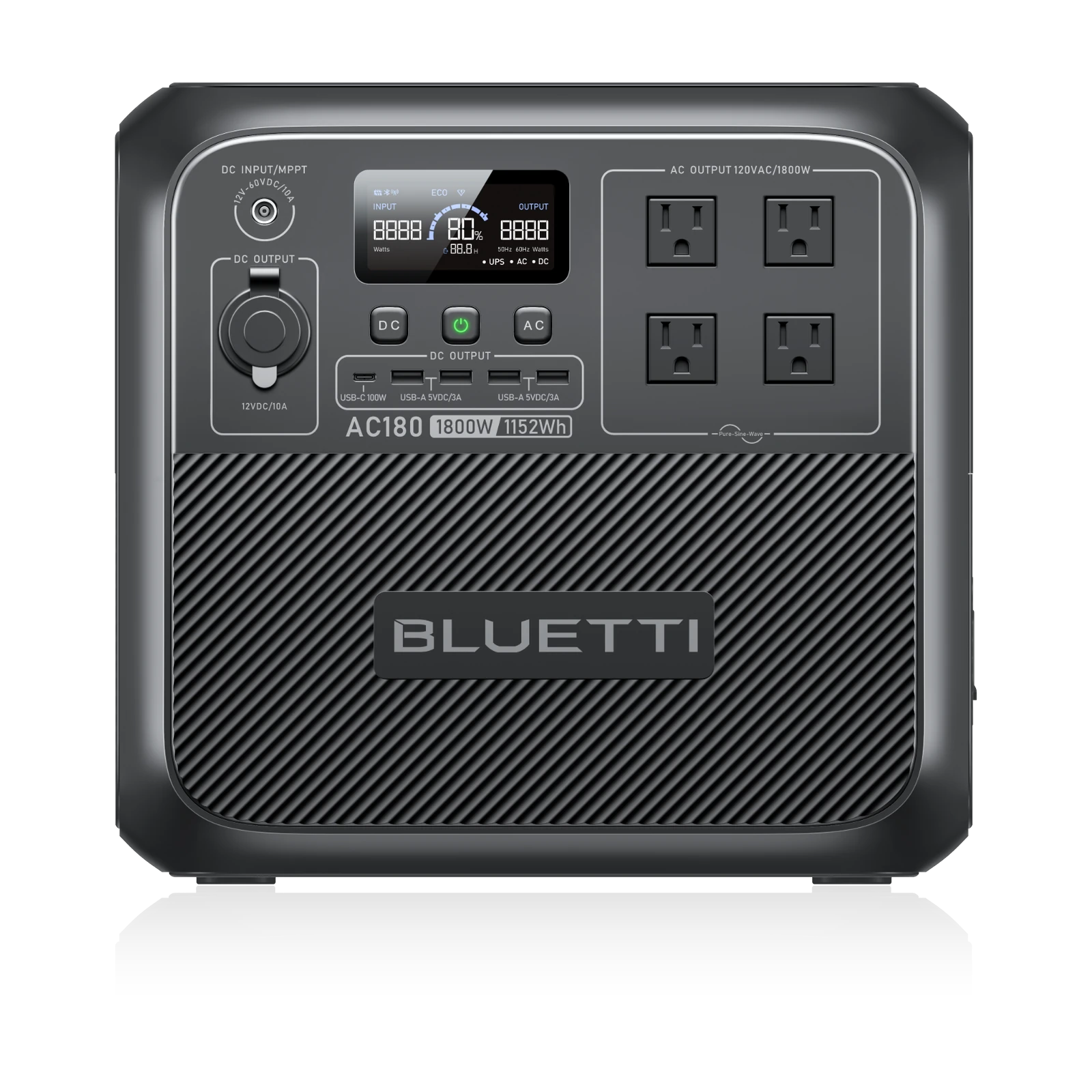
Bluetti AC180
- Home backup: Bluetti AC180 — stronger combined capacity and AC-output score
- CPAP & bedroom: Anker SOLIX F2000 — quieter under load
- Camping & RV: Anker SOLIX F2000 — lighter and easier to carry
Score breakdown
Battery-side usable capacity and how much you can run at once.
Owner reputation, safety record, warranty, and build durability.
Wall and solar recharge speed.
Lightweight, portable, and quiet enough to live with.
Computed from sourced data with a published, price-independent formula. Scores are relative to each model's size class.
Capacity truth
The watt-hours on the box aren't what reaches your devices. Same scale, both units.
2,048 Wh. Show source
claimed sourceankersolix.com ↗2026-07-04The marketing number — total cell capacity.
1,741 Wh. Show source
estimated sourceestimate = battery-side usable capacity × 85% inverter efficiencyWhat reaches an AC outlet — about 15% is lost turning battery power into household AC. How we estimate.
1,152 Wh. Show source
claimed sourcebluettipower.com ↗2026-07-04The marketing number — total cell capacity.
950 Wh. Show source
verified source~950 Wh (OutdoorGearLab)2026-07-04~950 Wh (OutdoorGearLab) · 18% below the label
Same-device runtime
| Device | Anker SOLIX F2000 | Bluetti AC180 | Assumption |
|---|---|---|---|
| CPAP (humidifier off) | about 24.2 nights | about 13.2 nights | 9 W · |
| CPAP (heated humidifier on) | about 3.9 nights | about 2.1 nights | 56 W · |
| Refrigerator (full-size) | about 28 hours | about 15 hours | 180 W × 35% duty cycle · |
| Wi-Fi router + modem | about 97 hours | about 53 hours | 18 W · |
| Laptop (65W charger) | about 54 hours | about 29 hours | 65 W × 50% duty cycle · |
| Phone (one full charge) | about 87 full charges | about 47 full charges | 20 W · |
One device at a time; estimates use each station's usable AC energy. Build your own load →
Key specs, side by side
| Spec | Anker SOLIX F2000 | Bluetti AC180 |
|---|---|---|
| AC-delivered capacity | 1,741 Whest.. Show sourceestimated sourceankersolix.com ↗2026-07-04 | 950 Whverified. Show sourceverified source~950 Wh (OutdoorGearLab)2026-07-04 |
| Continuous power output | 2,400 W. Show sourceclaimed sourceankersolix.com ↗ | 1,800 W. Show sourceclaimed sourcebluettipower.com ↗ |
| Surge power output | 2,800 W. Show sourceclaimed sourceankersolix.com ↗ | 2,700 W. Show sourceclaimed sourcebluettipower.com ↗ |
| Max solar input | 1,000 W. Show sourceclaimed sourceankersolix.com ↗ | 500 W. Show sourceclaimed sourcebluettipower.com ↗ |
| Weight | 30.5 kg. Show sourceclaimed sourceankersolix.com ↗ | 16 kg. Show sourceclaimed sourcebluettipower.com ↗ |
| Rated cycle life | 3,000 cycles. Show sourceclaimed sourceankersolix.com ↗ | 3,500 cycles. Show sourceclaimed sourcebluettipower.com ↗ |
Manufacturer figures unless marked verified or est. Tap or focus a figure to view its source. The better reading in each row is highlighted — lower wins for weight and recharge time.
Price & fair-price verdict
Each verdict compares today's price against that model's own tracked history — never MSRP theater.
Where these rank
- Anker SOLIX F2000 #7 of 8 in Quietest Power Stations · #8 of 10 in Best 2,000 Wh Stations
- Bluetti AC180 #1 of 10 in Lowest Cost per Usable Wh · #2 of 10 in Best Cold-Weather Power Stations
Quick answers
- Is the Anker SOLIX F2000 better than the Bluetti AC180?
- Too close to call overall — choose by how and where you use it. No price tie-breaker today — choose based on fit and the sourced details.
- How are these two power stations compared?
- Both are scored by the BatteryRank formula across four pillars — power, trust, charging, and livability — over sourced specs, owner reputation, and durability. Capacity scoring uses battery-side usable watt-hours; this page separately shows estimated or measured AC-delivered capacity. Price is shown against each model's own history, and the score is price-independent.
- Which has more usable capacity, the Anker SOLIX F2000 or Bluetti AC180?
- Use the capacity-truth section for the model-specific comparison. It separates rated battery energy from estimated or independently measured AC-delivered energy, so nameplate watt-hours are not mistaken for outlet runtime.
- Which has more AC output, the Anker SOLIX F2000 or Bluetti AC180?
- The key-differences table compares continuous inverter output and surge output when both sourced readings exist. A missing input stays N/A and never creates a winner.
- Which is lighter, the Anker SOLIX F2000 or Bluetti AC180?
- The key-differences table marks the lighter station only when both manufacturer-sourced weight readings are present. Open each model dossier for dimensions and the full portability context.
- Which is the better price today, the Anker SOLIX F2000 or Bluetti AC180?
- The decision dashboard evaluates each timestamped street price against that model's own tracked history. Price is separate from the quality score, and no deal claim appears without sufficient history.
- How does runtime compare between the Anker SOLIX F2000 and Bluetti AC180?
- The runtime table uses the same sourced device loads and each model's AC-delivered capacity. Results are planning estimates, not hands-on tests, and appear only when both models have enough data.
- Which model should I buy for my use case?
- Use the persona-fit section as a starting point, then confirm required output, runtime, charging, portability, and today's price. BatteryRank declares a use-case winner only when both sides have the needed inputs.
Keep deciding
- Full scorecard, specs & price for Anker SOLIX F2000 →
- Full scorecard, specs & price for Bluetti AC180 →
- See more alternatives to Anker SOLIX F2000 →
- See more alternatives to Bluetti AC180 →
- What size do you need? →
- Browse all rankings →
- Check device runtime evidence →
- Compare outage and trip load plans →
- Browse complete power kits →
- Capacity vs output explained →
- Battery cycle-life thresholds →
- UPS behavior explained →