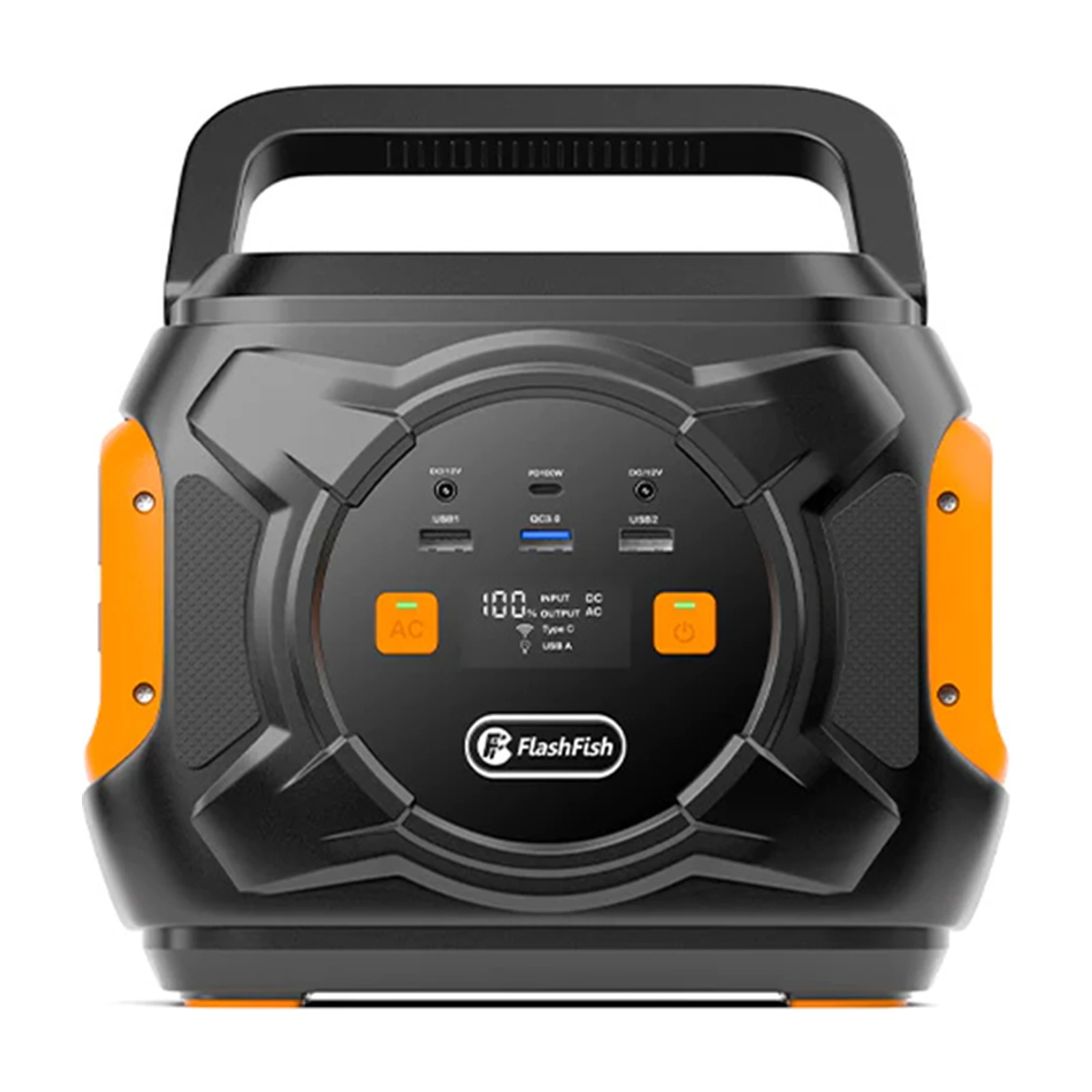
FlashFish A301 vs Jackery Explorer 300 Plus

Jackery Explorer 300 Plus leads by 11 points overall.
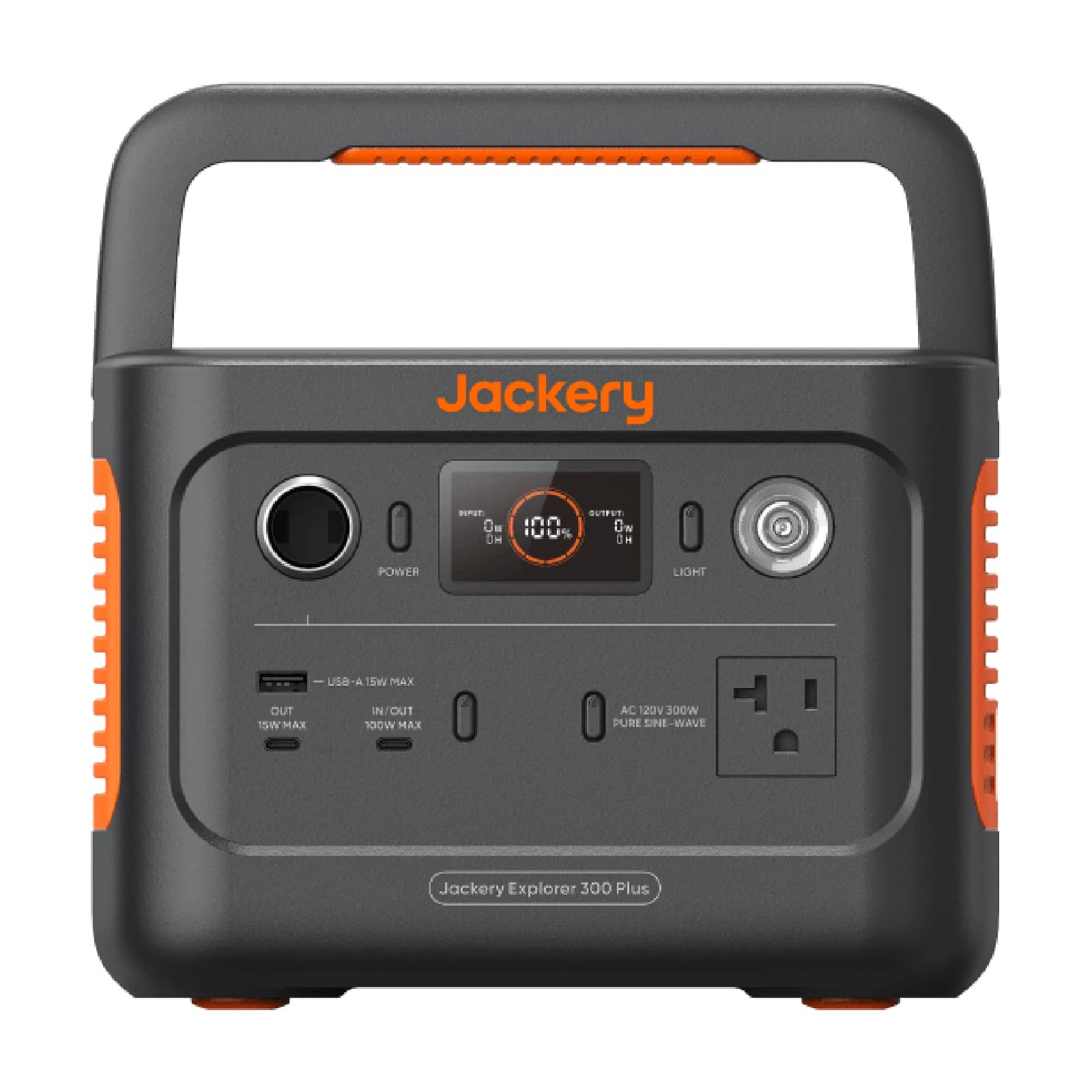
Jackery Explorer 300 Plus
- Home backup: FlashFish A301 — higher AC output
- Camping & RV: FlashFish A301 — lighter and easier to carry
Score breakdown
Battery-side usable capacity and how much you can run at once.
Owner reputation, safety record, warranty, and build durability.
Wall and solar recharge speed.
Lightweight, portable, and quiet enough to live with.
Computed from sourced data with a published, price-independent formula. Scores are relative to each model's size class.
Capacity truth
The watt-hours on the box aren't what reaches your devices. Same scale, both units.
292 Wh. Show source
claimed sourceflashfishoutdoor.com ↗2026-07-04The marketing number — total cell capacity.
223 Wh. Show source
estimated sourceestimate = battery-side usable capacity × 85% inverter efficiencyWhat reaches an AC outlet — about 15% is lost turning battery power into household AC. How we estimate.
288 Wh. Show source
claimed sourcejackery.com ↗2026-07-04The marketing number — total cell capacity.
253 Wh. Show source
verified source253Wh discharged at 50W load (Trusted Reviews) vs 288Wh rated2026-07-04253Wh discharged at 50W load (Trusted Reviews) vs 288Wh rated · 12% below the label
Same-device runtime
| Device | FlashFish A301 | Jackery Explorer 300 Plus | Assumption |
|---|---|---|---|
| CPAP (humidifier off) | about 3.1 nights | about 3.5 nights | 9 W · |
| CPAP (heated humidifier on) | about 0.5 nights | about 0.6 nights | 56 W · |
| Refrigerator (full-size) | about 3.5 hours | about 4.0 hours | 180 W × 35% duty cycle · |
| Wi-Fi router + modem | about 12 hours | about 14 hours | 18 W · |
| Laptop (65W charger) | about 6.9 hours | about 7.8 hours | 65 W × 50% duty cycle · |
| Phone (one full charge) | about 11 full charges | about 12 full charges | 20 W · |
One device at a time; estimates use each station's usable AC energy. Build your own load →
Key specs, side by side
| Spec | FlashFish A301 | Jackery Explorer 300 Plus |
|---|---|---|
| AC-delivered capacity | 223 Whest.. Show sourceestimated sourceflashfishoutdoor.com ↗2026-07-04 | 253 Whverified. Show sourceverified source253Wh discharged at 50W load (Trusted Reviews) vs 288Wh rated2026-07-04 |
| Continuous power output | 320 W. Show sourceclaimed sourceflashfishoutdoor.com ↗ | 300 W. Show sourceclaimed sourcejackery.com ↗ |
| Surge power output | 600 W. Show sourceclaimed sourceflashfishoutdoor.com ↗ | 600 W. Show sourceclaimed sourcejackery.com ↗ |
| Max solar input | 100 W. Show sourceclaimed sourceflashfishoutdoor.com ↗ | 100 W. Show sourceclaimed sourcejackery.com ↗ |
| AC charge time (0–100%) | 210 min. Show sourceclaimed sourceflashfishoutdoor.com ↗ | 120 min. Show sourceclaimed sourcejackery.com ↗ |
| Weight | 3.2 kg. Show sourceclaimed sourceflashfishoutdoor.com ↗ | 3.75 kg. Show sourceclaimed sourcejackery.com ↗ |
| Rated cycle life | 800 cycles. Show sourceclaimed sourceflashfishoutdoor.com ↗ | 3,000 cycles. Show sourceclaimed sourcejackery.com ↗ |
Only show differences
- AC-delivered capacity223 Wh253 Wh
- Continuous power output320 W300 W
- AC charge time (0–100%)210 min120 min
- Weight3.2 kg3.75 kg
- Rated cycle life800 cycles3,000 cycles
Manufacturer figures unless marked verified or est. Tap or focus a figure to view its source. The better reading in each row is highlighted — lower wins for weight and recharge time.
Where these rank
- FlashFish A301 #7 of 10 in Best for Camping · #9 of 10 in Best 300 Wh Stations
- Jackery Explorer 300 Plus #7 of 10 in Best 300 Wh Stations
Quick answers
- Is the FlashFish A301 better than the Jackery Explorer 300 Plus?
- Jackery Explorer 300 Plus leads by 11 points overall.
- Which has more usable capacity, the FlashFish A301 or Jackery Explorer 300 Plus?
- The Jackery Explorer 300 Plus, by 30 Wh — 223 Wh versus 253 Wh, a 13% advantage. At a 60 W load that is roughly 0.5 extra hours before the battery is empty. Both figures are estimated AC-delivered energy, not the nameplate battery rating — the watt-hours that actually reach your devices, which is always less than the number on the box.
- Which has more AC output, the FlashFish A301 or Jackery Explorer 300 Plus?
- The FlashFish A301: 320 W versus 300 W continuous. That gap matters only if a load sits between the two numbers — below 300 W both run it, above 320 W neither does. Surge headroom follows the same order: 600 W against 600 W, and surge is what decides whether a compressor or pump actually starts.
- How does runtime compare between the FlashFish A301 and Jackery Explorer 300 Plus?
- On the same sourced load — a refrigerator (full-size) — the Jackery Explorer 300 Plus runs longer: 4 hours against 3.5. These are planning estimates from each model's AC-delivered capacity, not stopwatch tests; real duty cycle and temperature move them.
- Which is lighter, the FlashFish A301 or Jackery Explorer 300 Plus?
- The FlashFish A301, by 0.5 kg (3.2 kg versus 3.8 kg). Both weights are manufacturer figures for the bare unit; cables and a solar panel add to whatever you actually carry.
- Which recharges faster from the wall, the FlashFish A301 or Jackery Explorer 300 Plus?
- The Jackery Explorer 300 Plus: 120 minutes from empty to full against 210 minutes, a difference of 90 minutes. This matters most between outages and during a short grid window — if you only ever recharge overnight, it does not matter at all.
- Which model should I buy for my use case?
- On the sub-scores that describe each use case: the FlashFish A301 for home backup, camping & rv. One model leads every use case we score here, which makes this an unusually clean choice.
Keep deciding
- Full scorecard, specs & price for FlashFish A301 →
- Full scorecard, specs & price for Jackery Explorer 300 Plus →
- See more alternatives to FlashFish A301 →
- See more alternatives to Jackery Explorer 300 Plus →
- What size do you need? →
- Browse all rankings →
- Check device runtime evidence →
- Compare outage and trip load plans →
- Browse complete power kits →
- Capacity vs output explained →
- Battery cycle-life thresholds →
- UPS behavior explained →