← All use cases

Calculated scenario · sourced manifest

Portable Power for a One-Day Outage

14 stations pass every configured check; 65 fail at least one.

Energy per day
2,460 Wh
Sourced manifest ↓
Running load
1,725 W
Sourced manifest ↓
Worst-start surge
2,745 W
Sourced manifest ↓
Required delivered energy
2,460 Wh
Sourced manifest ↓
Stations passing
14
Sourced manifest ↓
Stations failing
65
Sourced manifest ↓
Edit this plan in the sizing tool →

By the BatteryRank Engineering Team

01 · Load manifest

Every load in the calculation

Average draw applies each sourced duty cycle; energy is average draw × quantity × daily hours × scenario days.

Sourced device loads and calculated energy
DeviceQuantityHours / dayAverage drawScenario energySource
Refrigerator (full-size)AC12463 W1,512 WhSource · 2026-07-06
Wi-Fi router + modemAC12418 W432 WhSource · 2026-07-06
LED lamp (60W-equivalent bulb)AC389 W216 WhSource · 2026-07-06
Microwave (1,000W cooking power)AC10.21,500 W300 WhSource · 2026-07-06

02 · Reading the plan

What the numbers for a one-day outage leave out

What this situation actually demands

This plan is flat with one cliff in it. For twelve minutes a day it wants 1,725 W; for the remaining twenty-three hours and forty-eight minutes it wants 225 W, and the entire difference is a microwave reheating one meal. That shape, not the 2,460 Wh total, is what people get wrong when they ask how much power an outage needs — they picture a house drawing steadily and buy for the average, when what they have bought for is a spike they chose to include.

Where these plans go wrong

Shopping for a duration. Nobody picks how long the power stays off, so "enough for a day" is a purchase justified by an assumption nobody can hold you to. What this page can honestly give you is a rate — 2,460 Wh for twenty-four hours of this manifest — and the multiplication is yours to do. The second mistake follows immediately: assuming day two costs the same. The refrigerator's 1,512 Wh does not care what day it is, but the other 948 Wh is lamps and cooking, and those are habits that change by the second evening.

What this plan does not model

The largest omission on this page is that it starts billing refrigeration at minute one. A closed refrigerator coasts — the cabinet holds temperature for a while on no power at all, and only the door destroys that. BatteryRank publishes no sourced figure for how long, because it depends on the cabinet, how full it is, and how warm the room has got, so the honest position is that the first stretch of any outage is cheaper than this arithmetic says and we cannot tell you by how much. The microwave line is similarly yours: twelve minutes is one meal, and a household that reheats three times turns 300 Wh into 900 Wh without touching anything else.

03 · Station picks

Three ways to cover the plan

Some links on this page are affiliate links. BatteryRank may earn a commission at no extra cost to you. Commission never affects whether a station passes these checks; when two stations tie on every measured criterion, the one with a live retail offer is shown.

Critical-load fit

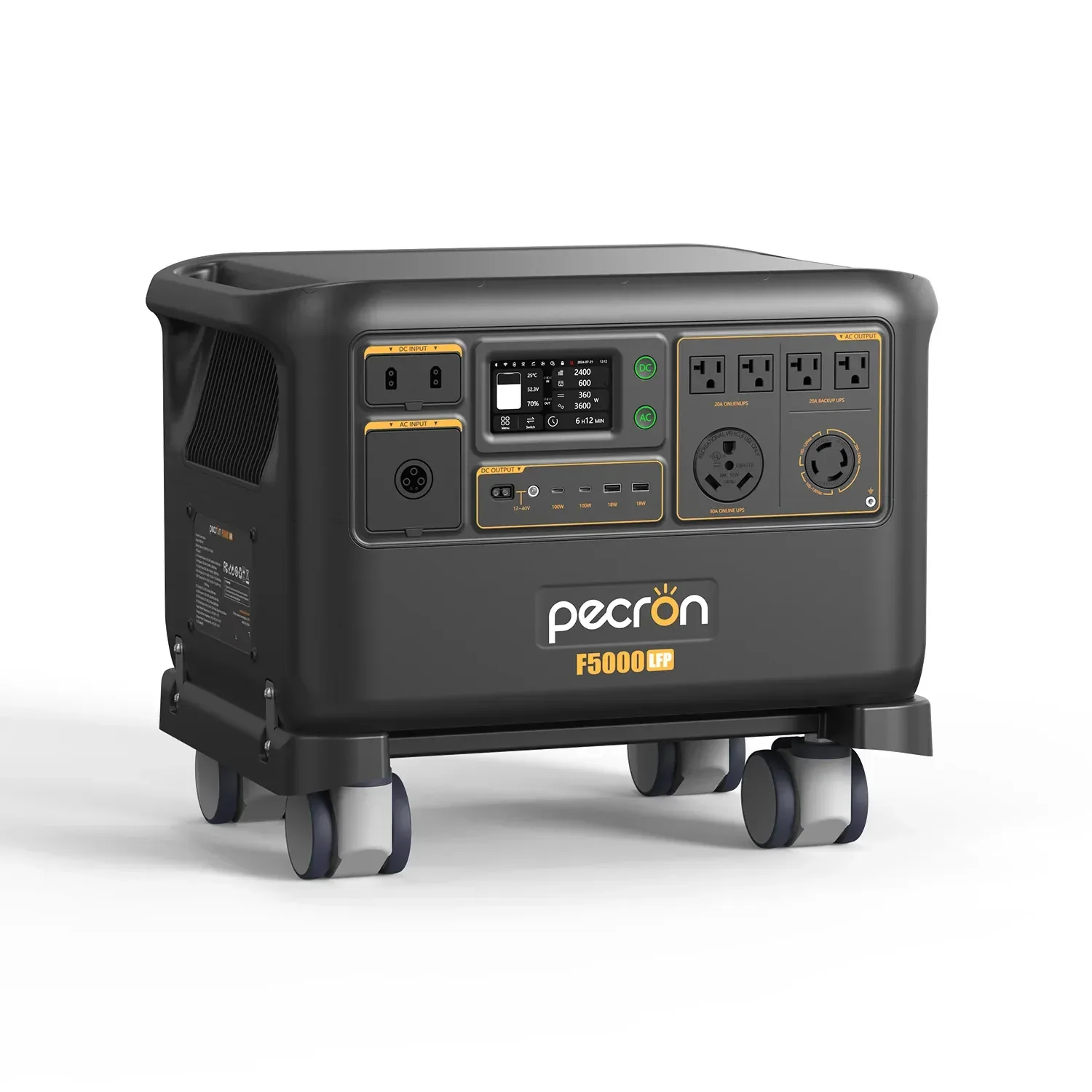
Pecron F5000LFP

Projected runtime
1.6 days
Headroom
59.2%
Weight
56.2 kg

Why it fits

5,475 W above the plan's running load (7,200 W continuous output)

Main compromise

4,800 W below the highest output reserve across 14 eligible models

Open sourced model dossier →

Best all-round fit

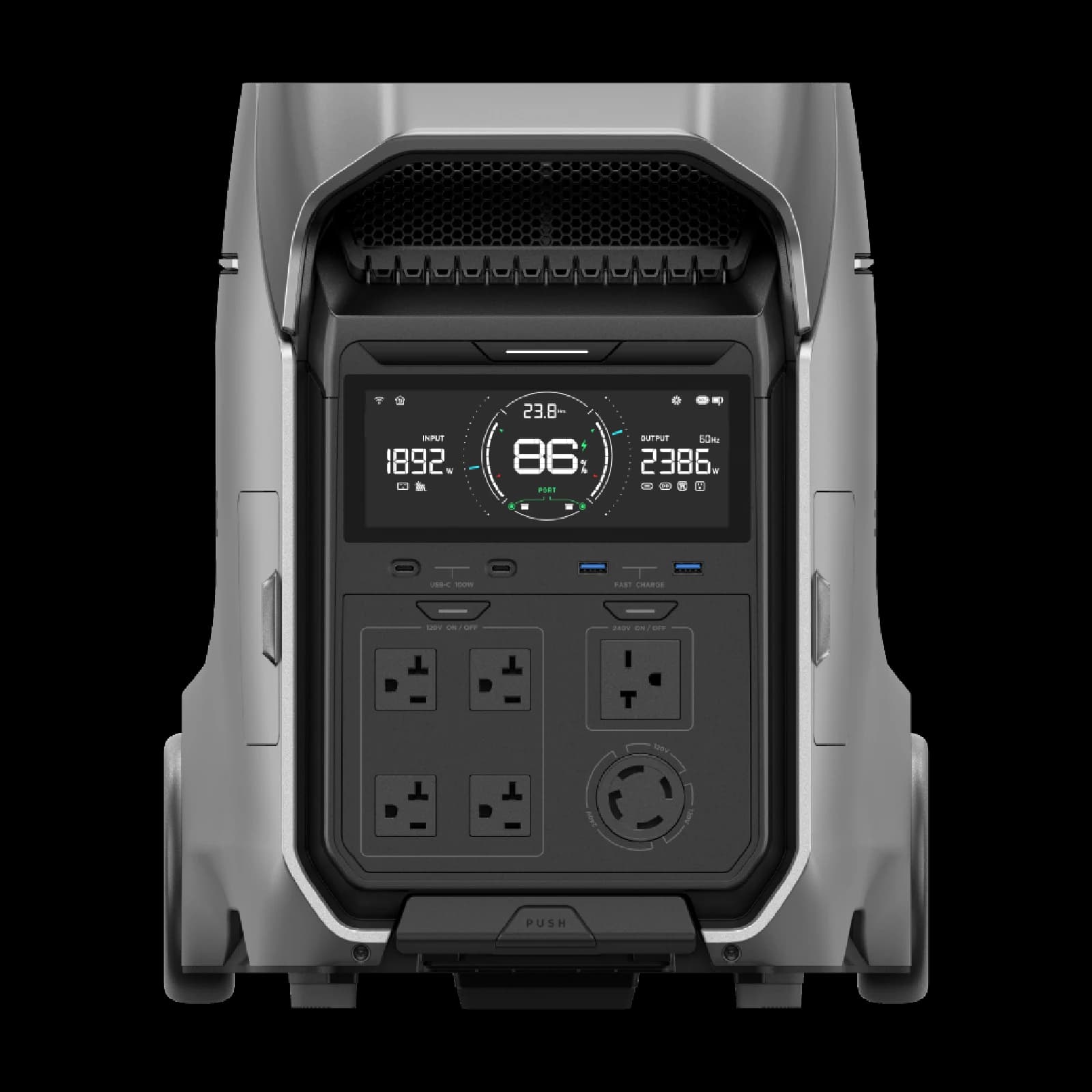
EcoFlow DELTA Pro 3

Projected runtime
1.5 days
Headroom
54.1%
Weight
51.5 kg

Why it fits

75.6 BatteryRank score — the highest of any station that fits this plan

Main compromise

4 points below the highest-scoring eligible model across 14 eligible models

Open sourced model dossier →

Maximum useful reserve

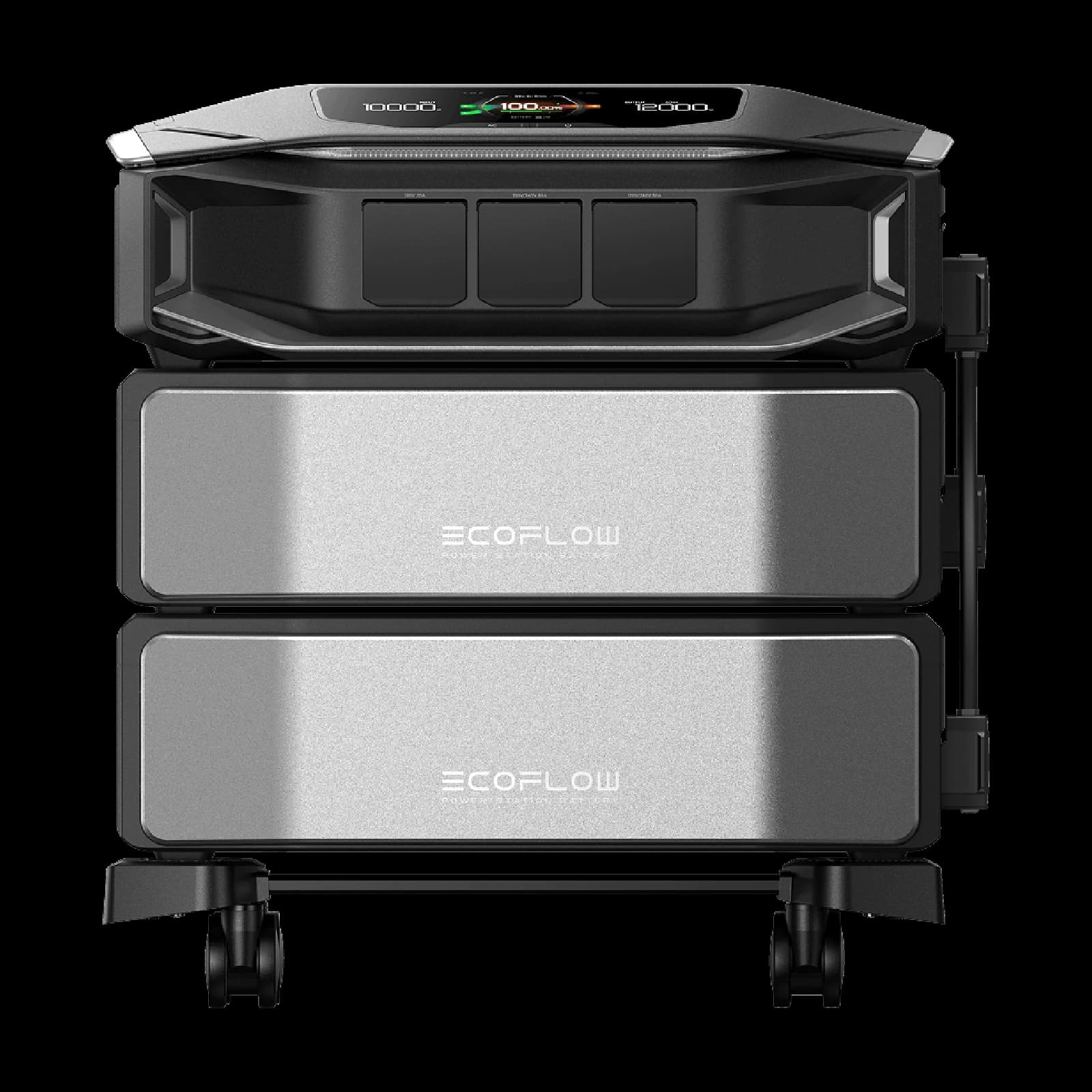
EcoFlow DELTA Pro Ultra X

Projected runtime
4.2 days
Headroom
324.6%
Weight
135.5 kg

Why it fits

4.2 projected runtime days

Main compromise

2,560 Wh below the largest sourced expanded reserve (13 of 14 eligible models have this sourced value)

Open sourced model dossier →

Solar balance

What recharging changes

The default plan does not assume solar recharging. Add a panel size in the editable calculator to see daily harvest and deficit by station.

Review the published solar method →

Explore passing models by projected runtime

This ordered data view is separate from the three recommended buying strategies above.

  1. 01EcoFlow DELTA Pro Ultra X4.2 days
  2. 02EcoFlow DELTA Pro Ultra2.1 days
  3. 03Zendure SuperBase V64002 days
  4. 04Jackery Explorer 5000 Plus1.7 days
  5. 05Pecron F5000LFP1.6 days

Questions from the same calculation

How much power do you need for a one-day outage?
2,460 Wh of delivered energy over 1 day, drawing 1,725 W if every device runs at once. Refrigerator (full-size) alone is 61% of that energy, so it is the load worth measuring first — the rest of the manifest barely moves the answer.
What decides whether a station can start this setup?
Refrigerator (full-size). Its sourced 1,200 W startup demand, arriving while the other devices keep running, sets a worst-case moment of 2,745 W — well above the 1,725 W running total. A station sized only to the running figure will carry this plan right up until that device restarts.
Why is every load on this plan running through the inverter?
None of the devices in this manifest has a manufacturer-supported DC input, so each one pays the DC-to-AC conversion cost. Where a device does offer a native 12 V cord — camping fridges especially — using it is the cheapest runtime you can buy.
So how much do I actually need? That is what I came here for.
2,460 Wh delivered for a full day of this manifest, and the useful thing is to treat it as a rate: two days is 4,920 Wh, three is 7,380 Wh, and somewhere in that multiplication is a station you are no longer willing to lift. That is this plan repeated, not our three-day scenario, which adds a chest freezer and lands higher.
What does keeping the microwave really cost?
Almost nothing in energy and a great deal in hardware. Twelve minutes of it is 300 Wh, about 12% of the day — but it is also 1,500 W of the plan at its loudest, and dropping it takes the worst instant from 2,745 W down to 1,245 W. You are buying inverter capacity for a fifth of an hour of convenience, which is a fair trade only if you have decided it is one.
Does a half-day outage cost half as much?
Roughly, for the refrigerator, and not at all for the rest. The 1,512 Wh compressor line tracks the clock almost exactly, so twelve hours really is about half of it. The other 948 Wh is three lamps in the evening and one meal — so an outage that starts at dawn and clears by lunch costs far less than the same twelve hours starting at five o'clock. It is the clearest reason this site publishes a rate instead of a verdict.