← Can it run?

Runtime evidence · sourced load

How Many Watts Does a Microwave Use?

A microwave draws 1,500 W while running. 55 stations clear the capacity, inverter, and startup checks at that load.

Average draw
1,500 W
Source · 2026-07-06
Startup requirement
No separate surge figure sourced
Source · 2026-07-06
Stations passing
55
Current sourced catalog

By the BatteryRank Engineering Team

01 · Runtime ladder

Capacity steps, on the same load

Nominal capacity × depth of discharge × inverter efficiency ÷ sourced average draw.

Estimated runtime by portable power station capacity
Capacity classEstimated runtimeEvidence
300 Whstep 10.2 hrMicrowave (1,000W cooking power) load · 2026-07-06
500 Whstep 20.3 hrMicrowave (1,000W cooking power) load · 2026-07-06
1,000 Whstep 30.5 hrMicrowave (1,000W cooking power) load · 2026-07-06
2,000 Whstep 41 hrMicrowave (1,000W cooking power) load · 2026-07-06

These are comparison projections, not a promise. Temperature, inverter behavior, cycling, and the individual station's measured delivered capacity can change real runtime.

02 · Reading the numbers

What the microwave numbers leave out

How this load actually behaves

The number on the front of a microwave is cooking output, not electrical input. A "1,000 W" microwave pulls about 1,500 W from the wall, because the magnetron is roughly 65% efficient at converting electricity into microwave energy. Everything about sizing follows from that gap.
Where buyers get this one wrong

Sizing to the 1,000 W badge. A 1,200 W inverter looks sufficient and is not. The reassuring half of this, though, is energy: microwaves run for minutes, so a five-minute reheat is only about 125 Wh. This is a load that is hard on the inverter and almost irrelevant to the battery.

What our figure does not cover

The 1,500 W input figure is representative of a 1,000 W-output countertop unit. Your own nameplate lists the input rating directly, usually on the back or inside the door frame, and that is the number your inverter has to clear.

03 · Passing stations

Three scenario-aware recommendations

Some links on this page are affiliate links. BatteryRank may earn a commission at no extra cost to you. Commission never affects whether a station passes these checks; when two stations tie on every measured criterion, the one with a live retail offer is shown.

Critical-load fit

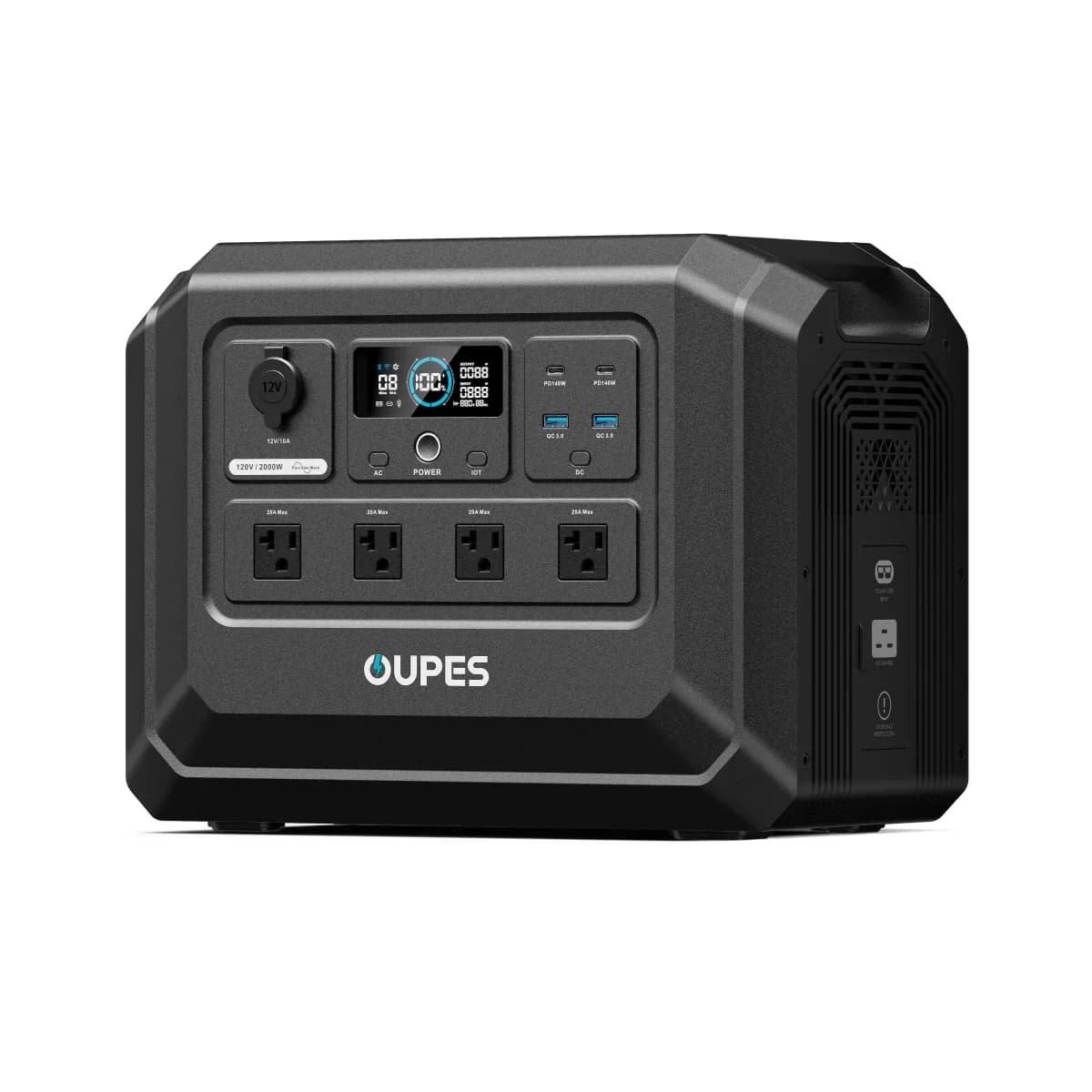
Oupes Mega 1 Lite

Projected runtime
50.1 hr
Headroom
108.9%
Weight
12 kg

Why it fits

500 W above the plan's running load (2,000 W continuous output)

Main compromise

10,000 W below the highest output reserve across 55 eligible models

Open sourced model dossier →

Best all-round fit

EcoFlow DELTA 3 Plus

Projected runtime
55.7 hr
Headroom
132.1%
Weight
12.5 kg

Why it fits

72 BatteryRank score — the highest of any station that fits this plan

Main compromise

7.7 points below the highest-scoring eligible model (54 of 55 eligible models have this sourced value)

Open sourced model dossier →

Maximum useful reserve

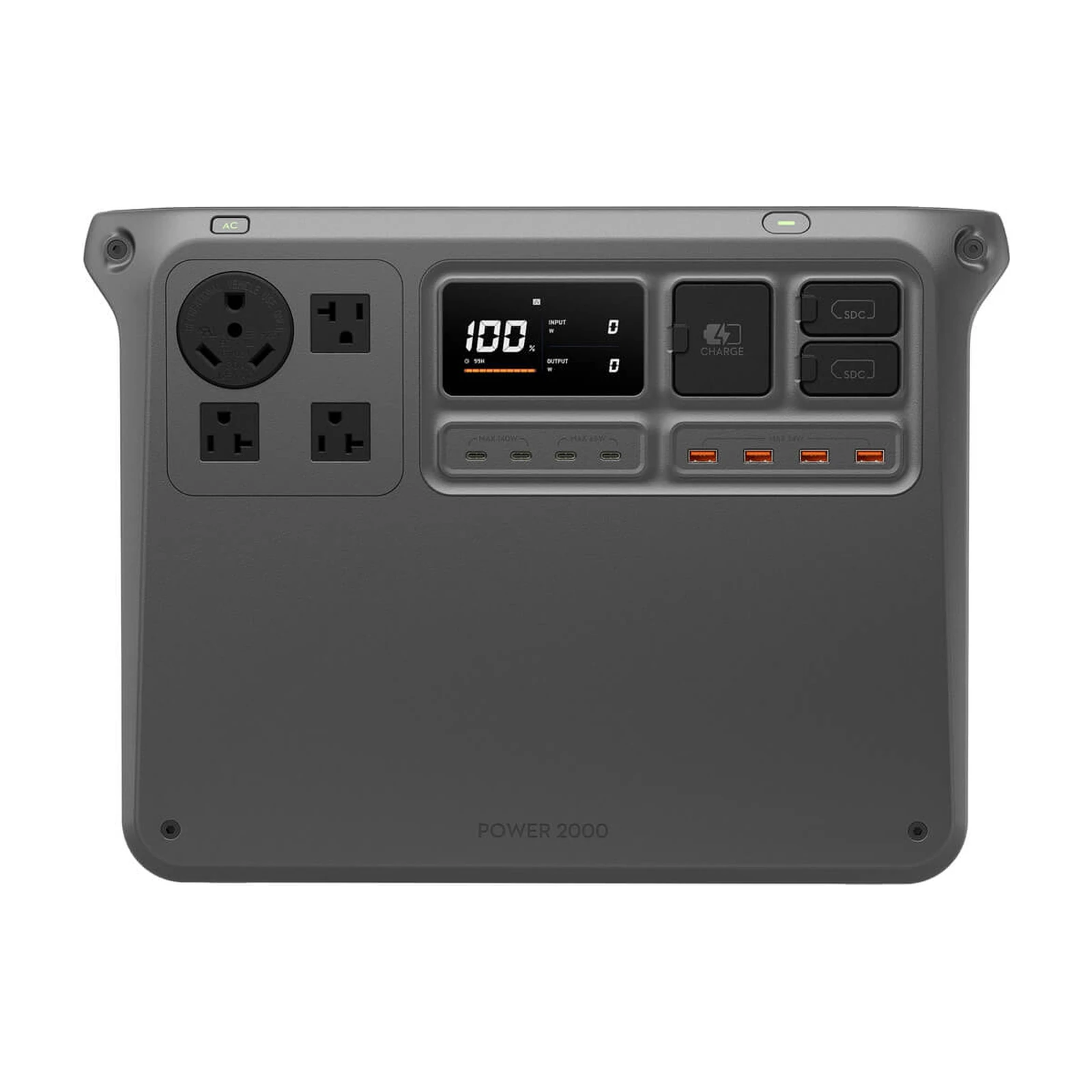
DJI Power 2000

Projected runtime
111.4 hr
Headroom
364.2%
Weight
22 kg

Why it fits

111.4 projected runtime hours

Main compromise

557.1 hours less projected runtime than the longest-running eligible model across 55 eligible models

Open sourced model dossier →

Explore passing models by projected runtime

This ordered data view is separate from the three recommended buying strategies above.

  1. 01EcoFlow DELTA Pro Ultra X668.5 hr
  2. 02EcoFlow DELTA Pro Ultra334.2 hr
  3. 03Zendure SuperBase V6400315.2 hr
  4. 04Jackery Explorer 5000 Plus274.2 hr
  5. 05Pecron F5000LFP250.7 hr

Runtime uses each linked model's sourced capacity and output data; open its dossier for provenance.

Solar effect

200 W of panels on EcoFlow DELTA Pro Ultra X

Daily harvest
560 Wh
Daily balance
Load covered
Runtime with solar
Indefinite in model

Computed with this model's sourced solar-input limit and BatteryRank's published harvest assumptions. Check the solar method → · Model sources →

04 · Evidence record

Device assumptions used

Sourced running draw
1,500 W
Duty cycle
100%
Startup surge
No separate surge figure sourced
Manufacturer spec · 2026-07-06

Questions, answered from the same inputs

How Many Watts Does a Microwave Use?
Yes. 55 stations in the current sourced catalog pass the capacity, inverter, and startup checks for the default runtime.
What power figure matters most for a microwave?
The sourced running draw determines both inverter fit and battery runtime. No separate real-watt startup figure is available from the cited source.
What size power station runs a microwave?
One whose continuous inverter rating clears the microwave's INPUT wattage — about 1,500 W for a typical 1,000 W-output unit — with margin. Battery capacity is rarely the binding constraint, because run times are measured in minutes.
Why does my 1,000 W station trip on a 1,000 W microwave?
Because the two numbers measure different things. The microwave's 1,000 W is cooking output; its electrical draw is about half again as much.
Is a microwave an efficient way to cook during an outage?
In energy terms it is one of the better electric options, precisely because it is fast — short run times keep total watt-hours low even at a high draw. A propane stove still keeps the load off the battery entirely.