← All use cases

Calculated scenario · sourced manifest

Power Starlink and a Camping Fridge

18 stations pass every configured check; 61 fail at least one.

Energy per day
1,184 Wh
Sourced manifest ↓
Running load
185 W
Sourced manifest ↓
Worst-start surge
185 W
Sourced manifest ↓
Required delivered energy
2,368 Wh
Sourced manifest ↓
Stations passing
18
Sourced manifest ↓
Stations failing
61
Sourced manifest ↓
Edit this plan in the sizing tool →

By the BatteryRank Engineering Team

01 · Load manifest

Every load in the calculation

Average draw applies each sourced duty cycle; energy is average draw × quantity × daily hours × scenario days.

Sourced device loads and calculated energy
DeviceQuantityHours / dayAverage drawScenario energySource
Starlink (Standard kit)AC1875 W1,200 WhSource · 2026-07-06
12V camping fridge (45L)DC12413.5 W648 WhSource · 2026-07-06
Laptop (65W charger)AC1832.5 W520 WhSource · 2026-07-06

02 · Reading the plan

What the numbers for Starlink and a camping fridge leave out

What this situation actually demands

Nothing on this plan is hard to power, and that is the finding. Everything running at once is 185 W, which the smallest inverter in the catalogue at 200 W clears on its own, and no line here has a compressor start above its running draw — so the specification people normally shop on decides nothing. What replaces it is a split worth seeing: 860 Wh of this 1,184 Wh day is choices you make hour by hour, and 324 Wh is a thermostat making them for you.

Where these plans go wrong

Budgeting the appliance and forgetting the hours. The cold box is the line that feels expensive and it is the one you cannot negotiate with — it cycles on ambient temperature and lid openings, not on your schedule. The dish and the laptop are the opposite: 600 Wh and 260 Wh that exist only because this manifest assumed eight hours of each. Two hours less of the dish is 150 Wh, which is more than half of what the laptop costs across the entire day, and it costs nothing but a habit.

What this plan does not model

Both duty assumptions here are habits rather than specifications, which makes them the weakest numbers on the page. The laptop is modelled at half duty across its eight hours — a machine idling and topping up in bursts, not one exporting video — and worked hard it runs closer to continuous, adding 260 Wh to the day. The dish is modelled as switched off for sixteen hours in every twenty-four, and left standing around the clock it costs three times what this plan budgets for it. Neither figure is a property of the hardware; both are yours to set.

03 · Station picks

Three ways to cover the plan

Some links on this page are affiliate links. BatteryRank may earn a commission at no extra cost to you. Commission never affects whether a station passes these checks; when two stations tie on every measured criterion, the one with a live retail offer is shown.

Lightweight fit

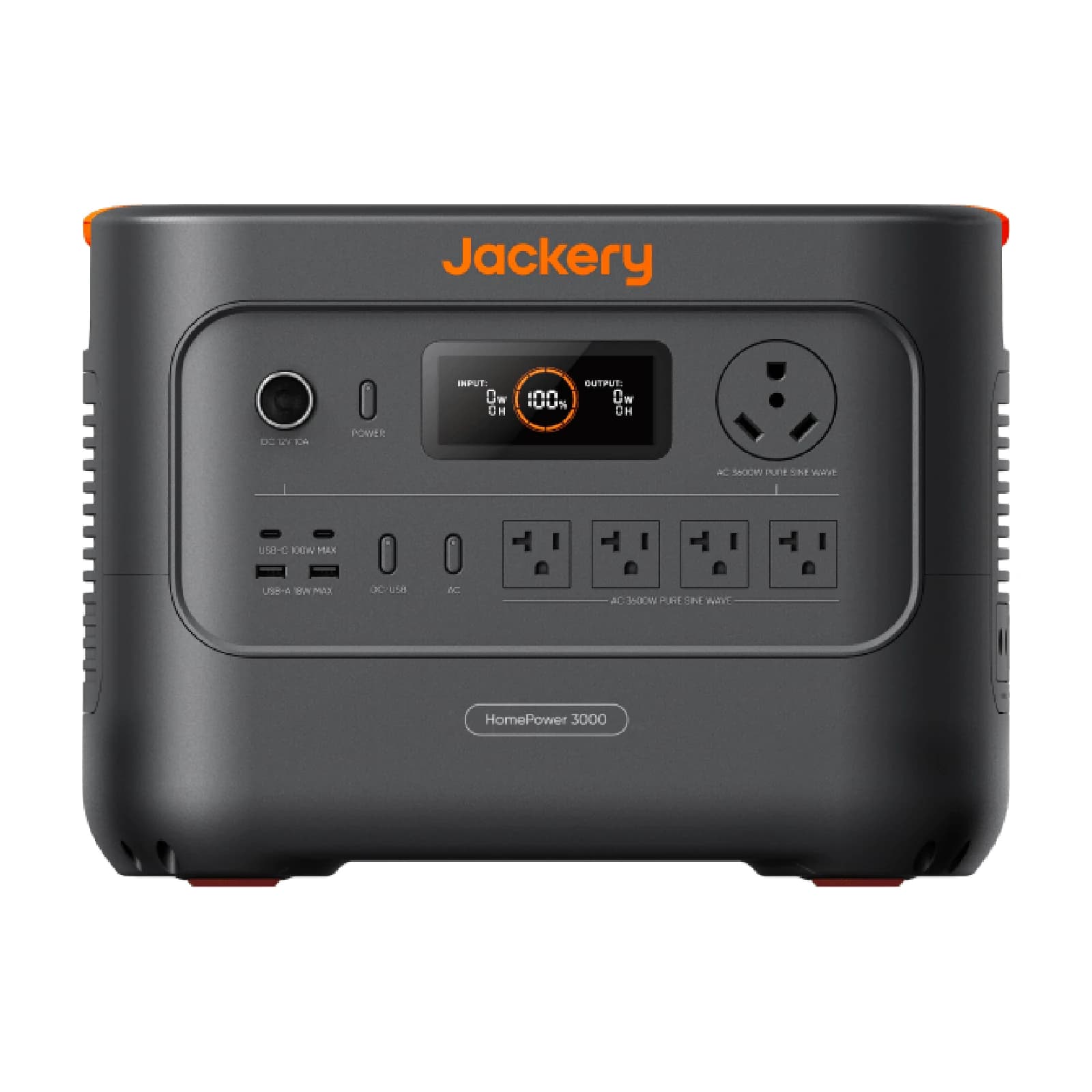
Jackery HomePower 3000

Projected runtime
2.2 days
Headroom
12%
Weight
27 kg

Why it fits

27 kg, 12 kg above the 15 kg preferred limit

Main compromise

1.2 kg heavier than the lightest eligible model (17 of 18 eligible models have this sourced value)

Open sourced model dossier →

Best all-round fit

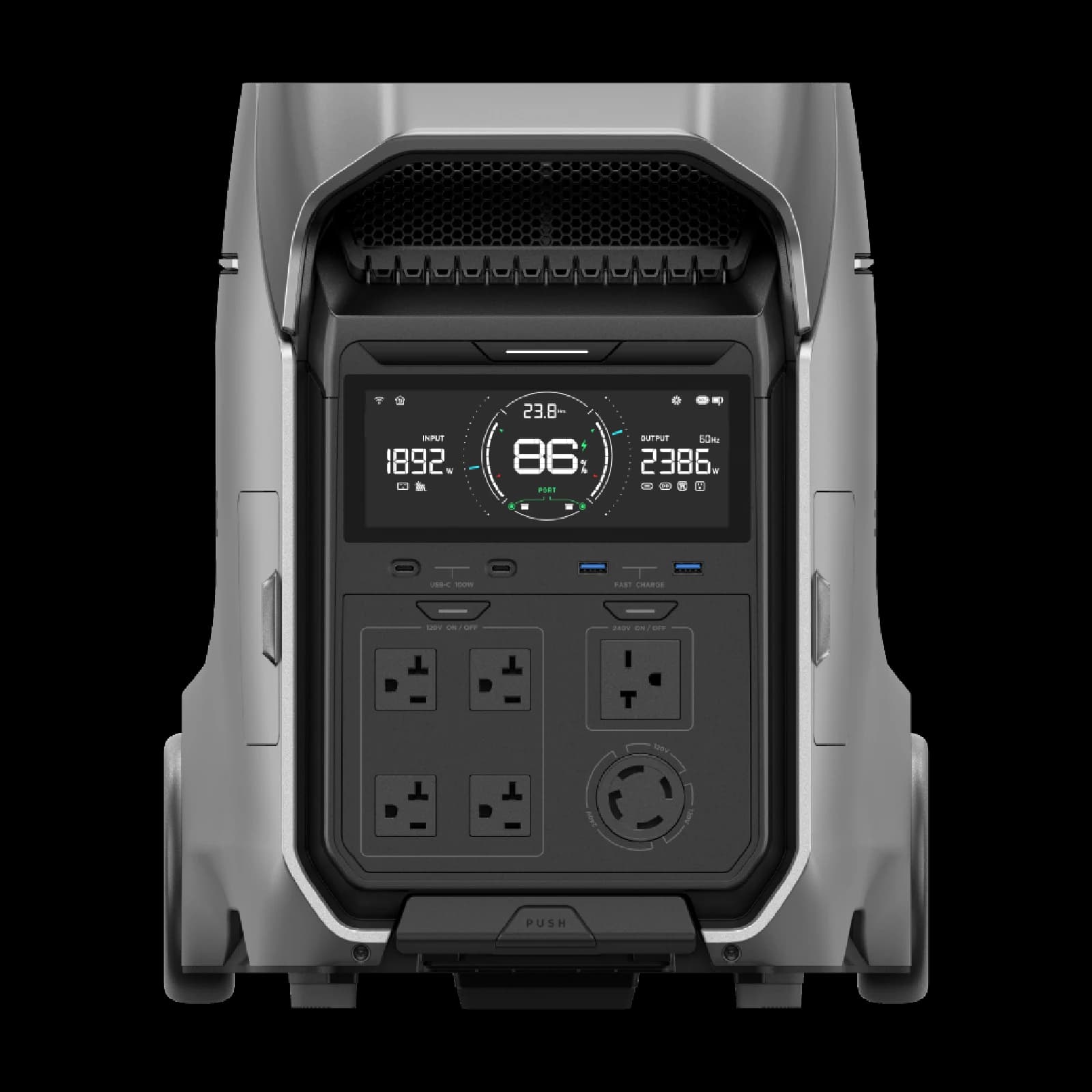
EcoFlow DELTA Pro 3

Projected runtime
3.3 days
Headroom
62.5%
Weight
51.5 kg

Why it fits

75.6 BatteryRank score — the highest of any station that fits this plan

Main compromise

4 points below the highest-scoring eligible model across 18 eligible models

Open sourced model dossier →

Longer off-grid stay

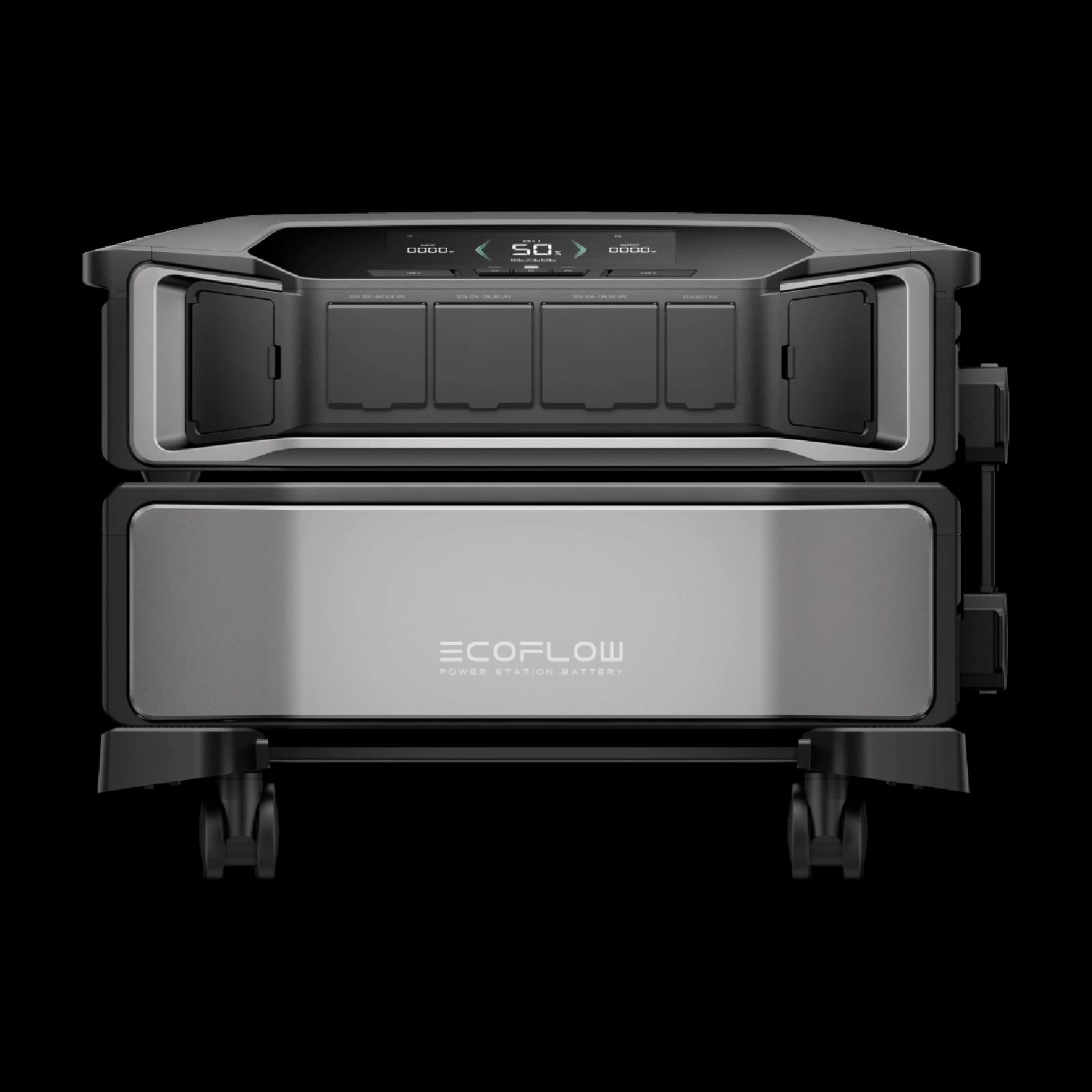
EcoFlow DELTA Pro Ultra

Projected runtime
4.5 days
Headroom
123.9%
Weight
82.4 kg

Why it fits

4.5 projected runtime days

Main compromise

4.5 days less projected runtime than the longest-running eligible model across 18 eligible models

Open sourced model dossier →

Solar balance

What recharging changes

On EcoFlow DELTA Pro Ultra X, the configured 200 W array harvests 560 Wh/day.

The remaining deficit is 812 Wh/day, for about 15.1 days of modeled runtime.

Review the published solar method →

Explore passing models by projected runtime

This ordered data view is separate from the three recommended buying strategies above.

  1. 01EcoFlow DELTA Pro Ultra X9 days
  2. 02EcoFlow DELTA Pro Ultra4.5 days
  3. 03Zendure SuperBase V64004.2 days
  4. 04Jackery Explorer 5000 Plus3.7 days
  5. 05Pecron F5000LFP3.4 days

Questions from the same calculation

How much power do you need for Starlink and a camping fridge?
2,368 Wh of delivered energy over 2 days, drawing 185 W if every device runs at once. Starlink (Standard kit) alone is 51% of that energy, so it is the load worth measuring first — the rest of the manifest barely moves the answer.
What decides whether a station can start this setup?
Nothing in this manifest has a motor or compressor start above its running draw, so the 185 W continuous figure is the real inverter requirement. That is unusual — most outage plans are gated by a startup spike rather than by running watts.
Does running the DC loads on 12 V actually change the result?
Yes. 12V camping fridge (45L) is planned on the station's DC output, which skips the inverter conversion entirely. The same hardware on an AC outlet would draw the same work from the battery plus the conversion overhead, and over 2 days that difference compounds.
Does a 200 W panel keep up with this?
Not quite, and it is still most of the battle. The modelled harvest is 560 Wh a day against 1,184 Wh of draw, so the panel covers about 47% and turns the net drain into 624 Wh. On the same battery that stretches a two-day plan to nearly four days, which is the difference between a weekend and a trip.
What happens if a second laptop joins the trip?
The day goes to 1,444 Wh, about 22% more, and the running total to 250 W — which every station in the catalogue except the smallest still clears without thinking. Nothing structural changes. This plan scales by addition rather than by tier, which is unusual enough on this site to be worth saying out loud: most manifests break at a threshold, and this one just gets gradually bigger.
Should the fridge go off overnight to save power?
No, and the arithmetic says the idea is not even tempting. The fridge is 324 Wh across a full twenty-four hours, so twelve hours off saves at most 162 Wh — less than three hours of the dish — while every degree the box warms has to be pulled back out in the morning. Cold is the one thing on this plan that is cheaper to hold than to recover.