Skip to content
← Can it run?

Runtime evidence · sourced load

How Many Watts Does a 12V Camping Fridge Use?

A 12V camping fridge draws 13.5 W while running. 67 stations clear the capacity, inverter, and startup checks at that load.

Average draw
13.5 W
Source · 2026-07-06
Startup requirement
No separate surge figure sourced
Source · 2026-07-06
Stations passing
67
Current sourced catalog

By the BatteryRank Engineering Team

01 · Runtime ladder

Capacity steps, on the same load

Nominal capacity × depth of discharge × inverter efficiency ÷ sourced average draw.

Estimated runtime by portable power station capacity
Capacity classEstimated runtimeEvidence
300 Whstep 117 hr12V camping fridge (45L) load · 2026-07-06
500 Whstep 228.3 hr12V camping fridge (45L) load · 2026-07-06
1,000 Whstep 356.7 hr12V camping fridge (45L) load · 2026-07-06
2,000 Whstep 4113.3 hr12V camping fridge (45L) load · 2026-07-06

These are comparison projections, not a promise. Temperature, inverter behavior, cycling, and the individual station's measured delivered capacity can change real runtime.

Personalize the estimate

Use your appliance label or meter

Replace the representative load with a typical-day meter reading. Add the running and startup watts from your own label or meter to update the inverter checks. These entries only change this page view.

Sourced baseline: 13.5 W average from 45 W running at a 30% duty cycle. 12V camping fridge (45L) source · 2026-07-06 ↗

Blank uses the sourced default. Enter nameplate watts or a meter reading while the compressor or pump is running.

Leave blank to use a sourced figure when available. Enter real startup watts only from an OEM source or an inrush meter; an LRA amp rating is not a watt value.

Default follows this page's cited use case. Average energy is assumed to continue through this window.

Your adjusted estimate

Average load 13.5 W · running check 45 W

300 Wh nominal

17 hr

500 Wh nominal

28.3 hr

1,000 Wh nominal

56.7 hr

2,000 Wh nominal

113.3 hr

Runtime ladder uses the same comparison assumptions as the table above. Station-specific fit below uses each model's capacity and inverter data.

67 of 80 stations pass the capacity, running, and startup checks for 24 hr using published station specs; appliance startup remains unverified.

Station checks use data on linked model profiles. Temperature, compressor cycling, wiring, inverter behavior, and actual starting current can change results.

02 · Reading the numbers

Planning power for 12V camping fridge

How this load actually behaves

A 12 V compressor fridge is the one appliance here that can skip the inverter entirely. Running it from the station's DC socket avoids the DC-to-AC conversion step and the losses that come with it, which is why the same fridge on the same station can last noticeably longer on the 12 V outlet than on a wall socket.
The detail that changes the answer

Running it on AC out of habit, through the fridge's bundled mains adapter, and paying the inverter tax for no reason. The other one is trusting the rated draw: a compressor fridge cycles, and its duty depends almost entirely on ambient temperature and how often the lid is opened. The same fridge is a modest load in spring and a serious one in a hot vehicle.

What to check in your setup

Our figure is a steady-state duty for a mid-size 12 V fridge at moderate ambient temperature. Pull-down from warm, direct sun on the cabinet, and frequent opening all push consumption well above it — plan a margin rather than the projection.

03 · Passing stations

Three scenario-aware recommendations

Some links on this page are affiliate links. BatteryRank may earn a commission at no extra cost to you. Commission never affects whether a station passes these checks; when two stations tie on every measured criterion, the one with a live retail offer is shown.

Lightweight fit

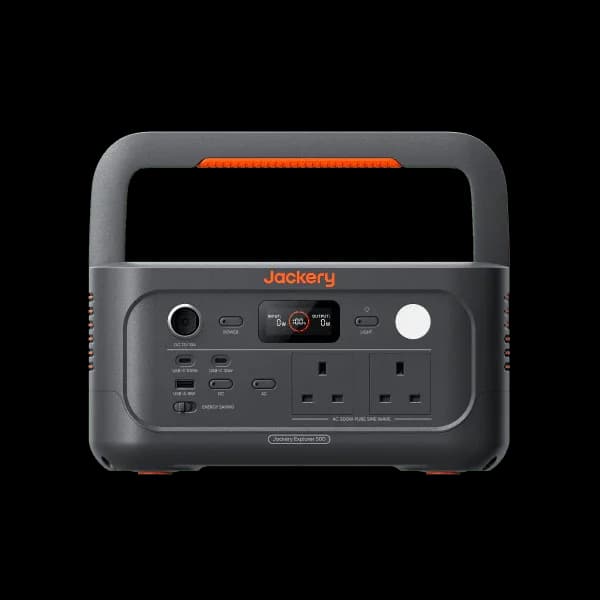
Jackery Explorer 500 v2

Projected runtime
29 hr
Headroom
20.9%
Weight
5.7 kg

Why it fits

5.7 kg, 9.3 kg below the 15 kg preferred limit

Main compromise

9,800 W below the highest sourced solar input across 67 eligible models

Open sourced model dossier →

Best all-round fit

EcoFlow DELTA 3 Plus

Projected runtime
64.5 hr
Headroom
168.6%
Weight
12.5 kg

Why it fits

72 BatteryRank score, considered alongside this role's capacity and output requirements

Main compromise

7.7 points below the highest-scoring eligible model (66 of 67 eligible models have this sourced value)

Open sourced model dossier →

Longer off-grid stay

Bluetti AC240

Projected runtime
96.3 hr
Headroom
301.2%
Weight
33 kg

Why it fits

96.3 projected runtime hours

Main compromise

677.4 hours less projected runtime than the longest-running eligible model across 67 eligible models

Open sourced model dossier →

Explore passing models by projected runtime

This ordered data view is separate from the three recommended buying strategies above.

  1. 01EcoFlow DELTA Pro Ultra X773.7 hr
  2. 02EcoFlow DELTA Pro Ultra386.8 hr
  3. 03Zendure SuperBase V6400364.8 hr
  4. 04Jackery Explorer 5000 Plus317.3 hr
  5. 05Pecron F5000LFP290.1 hr

Runtime uses each linked model's sourced capacity and output data; open its dossier for provenance.

Solar effect

200 W of panels on EcoFlow DELTA Pro Ultra X

Daily harvest
560 Wh
Daily balance
Load covered
Runtime with solar
Indefinite in model

Computed with this model's sourced solar-input limit and BatteryRank's published harvest assumptions. Check the solar method → · Model sources →

04 · Evidence record

Device assumptions used

Sourced running draw
45 W
Duty cycle
30%
Startup surge
No separate surge figure sourced
Manufacturer spec · 2026-07-06 ↗

Questions, answered from the same inputs

How Many Watts Does a 12V Camping Fridge Use?
Yes. 67 stations in the current sourced catalog pass the capacity, inverter, and startup checks for the default runtime.
What power figure matters most for a 12V camping fridge?
The sourced running draw determines both inverter fit and battery runtime. No separate real-watt startup figure is available from the cited source.
Should I run a camping fridge on 12 V or on the AC outlet?
12 V, whenever the station has a suitable socket and the fridge came with a DC cord. You skip the inverter conversion and its standby overhead, and on a multi-day trip that difference compounds.
Does the fridge need to run all night?
It will cycle on its own thermostat, which is different from running continuously. Pre-chilling the fridge and its contents on shore power before you leave is the single most effective thing you can do for trip runtime.
Why does the station's 12 V port amperage matter?
Because the socket has its own current limit that is independent of the inverter rating. A station with plenty of watts on paper can still be unable to supply a fridge through an undersized DC outlet, so check the port spec, not just the total.